Showing posts with label Monarch butterfly. Show all posts

Sunday, August 10, 2025

August


Spicebush swallowtail butterfly.  

    “August is the slow, gentle month that stretches out the longest across the span of a year. It yawns and lingers on with the light in its palms.” Victoria Erikson    
 
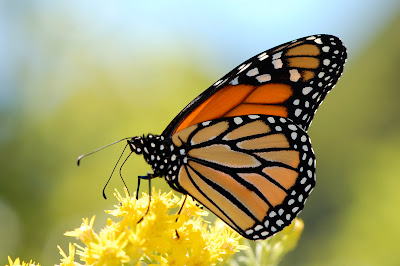
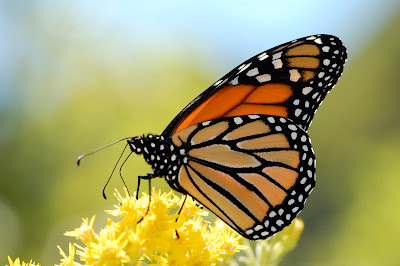
Monarch butterfly. Click to enlarge.


Sunday, August 20, 2023

Mid-August


A monarch butterfly on a buddleia flower. Click to enlarge.

And a silver-spotted skipper butterfly.

And haiku by Japanese poet, Kobayashi Issa (1763-1828).

a butterfly deigns 

to come and dance...

summer flowers

Sunday, February 27, 2022

Countdown to Butterfly Weed


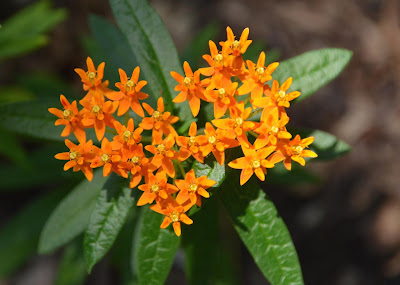
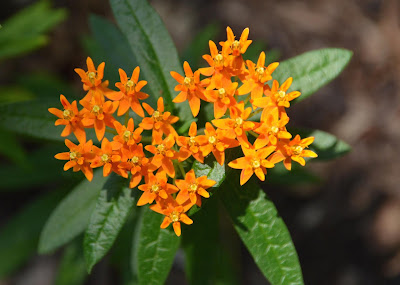
This is orange milkweed also known as butterfly weed, Asclepias tuberosa. It is a pretty native plant that is important to monarch butterflies. Adult butterflies feed on its nectar. Click to enlargre.

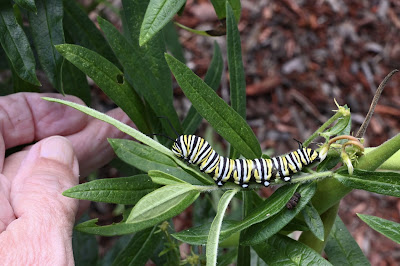
It is also a host plant for monarch caterpillars. Here's one now, eating foliage.

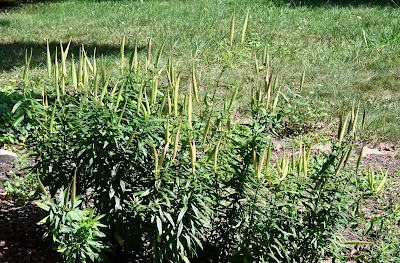
It's really pretty in the garden, producing pods at the end of the growing season. Here is a patch I grew from seeds. At the end of the season I collected seeds from these pods.

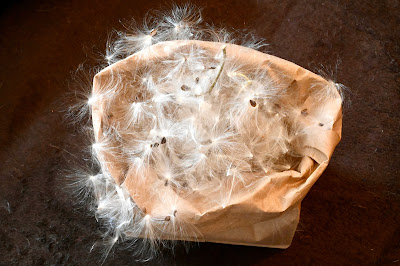
They've been in a paper bag since then.

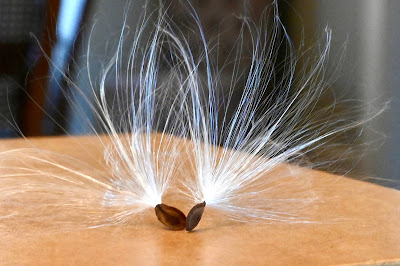
Look how delicate and pretty they are. They are incredibly well engineered, lighter than feathers and ready to fly on the slightest puff of air. As soon as I opened the bag they commenced flying all over my house. 

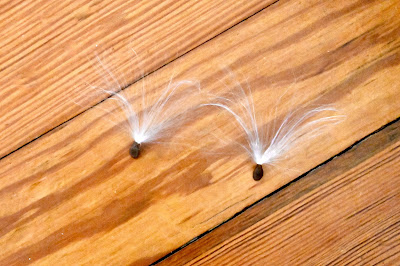
These two were making their way across the floor. Looking for the garden?

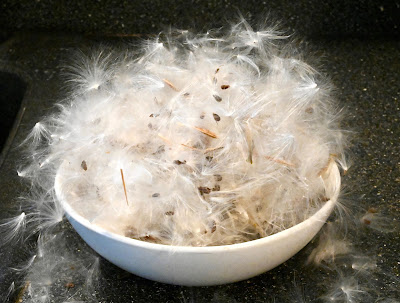
My bounty of milkweed seeds. 

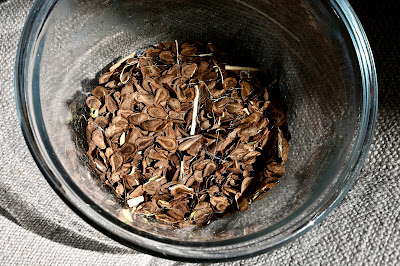
Eventually I removed all the fluff. After a little vacuuming all is OK again. I'm going to cold treat them by keeping them moist in the refrigerator for 30 days. It will simulate winter and increase the percentage that germinate when I plant them later. I mentioned above that I grew my plants from seeds. I bought those seeds from a nursery at 40 seeds for $6. Behold my seed wealth now!

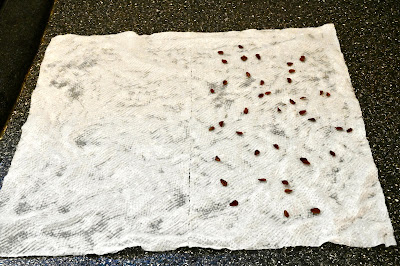
I  wet a paper towel, squeezed out excess water, sprinkled about 40 seeds on one side.

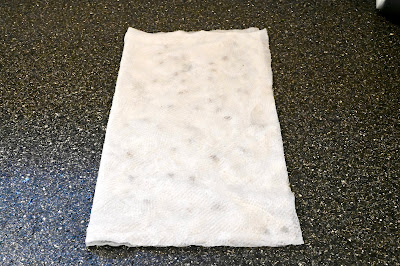
Folded once.

Folded again. I made four of these.

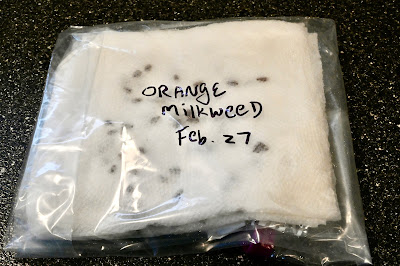
I put them all in a big sealable plastic bag. Then into the refrigerator until the end of March when I will plant them in little pots indoors. At the end of April, after fear of frost, they'll be ready to plant outside. And then...


Sunday, December 19, 2021

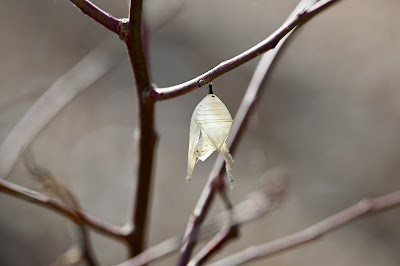
Empty Chrysalis


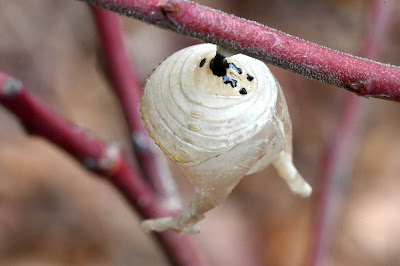
I found this empty butterfly chrysalis on a bush in my yard this week. Click to enlarge.

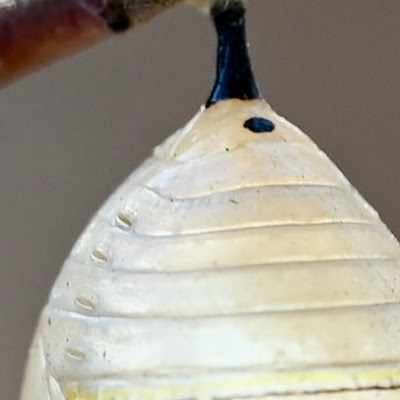
It has ridges where the butterfly's abdominal segments developed. The little black stem on top is called a cremaster and attaches the chrysalis to a little pad of silk that the caterpillar spins and from which the whole thing hangs. It's impressively strong; it's been through a lot of wind and rain lately and it's still stuck tight.

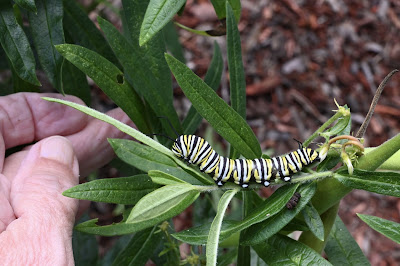
There were a lot of monarchs on the orange milkweed plants in the yard this year. The chrysalis was only a few feet from where I took this caterpillar's picture. Could be his!

It makes me wonder if the butterfly made it safely south, if it's hanging upside down right now, warm among a thousand others, drowsing is an orange cloud and waiting for spring.

The moral of the story: Plant Milkweed.


Sunday, August 22, 2021

Butterfly Season


I spotted a lot of big butterflies this week. Like this monarch.

This eastern tiger swallowtail.

A couple of spicebush swallowtails. Click to enlarge.

And a variegated fritillary -- a name I like to say out loud.

We focus on the beauty of butterfly wings, of course, but their bodies are often lovely, too. Check out the polka dots on the monarch.

And this!

Monday, September 5, 2016

Happy Labor Day!

Monarch butterflies at Cape May Point, NJ. Their work is never done! If you would like to read what the United States Department of Labor has to say about the history and meaning of Labor Day -- click here. And click on the photo to enlarge. 

Monday, August 29, 2016

I Love Pier 6

A wildflower meadow fills much of Pier 6 in Brooklyn Bridge Park. 
It is equally tempting there to wander the flower-lined paths or sit among the blossoms. 
Insects and flowers go together. There is so much activity. Right now there are lots of monarch butterflies gathering nectar from milkweeds. 
And so many kinds of ladybugs you can hardly keep track. The ladybugs are feasting on aphids. The aphids are feasting on plants. 
There are thousands of bees of all kinds collecting nectar and pollen like this honeybee.  
A few mockingbirds are always there making a racket and sometimes swooping into the flowers to catch tasty insects. 
If you follow your curiosity you can have adventures and discover things. I stopped to look at the fruit on this tree. 
I think it's a kind of magnolia that will ripen to look like this one nearby. 
But see that smudge that looks like a bird dropping on the low left leaf? 
Close up it looks like this. 
It's a tiger swallowtail caterpillar! Click to enlarge. 
I find amazing things in the urban wildflower meadow at Pier 6! 
Iris Murdoch wrote in A Fairly Honourable Defeat: People from a planet without flowers would think we must be mad with joy the whole time to have such things about us. 

Sunday, August 14, 2016

Butterfly Dream

Today was too hot for human comfort in New York, but the butterflies seemed undaunted. There were several monarchs like the one above in the wildflower meadow on Pier 6 in Brooklyn Bridge Park. They reminded me of the famous butterfly dream of the Chinese philosopher Chuang-Tzu, which I've quoted below. 

"Once upon a time, I dreamt I was a butterfly, fluttering hither and thither, to all intents and purposes a butterfly. I was conscious only of my happiness as a butterfly, unaware that I was myself. Soon I awakened, and there I was, veritably myself again. Now I do not know whether I was then a man dreaming I was a butterfly, or whether I am now a butterfly, dreaming I am a man." 

 -Zhuangzi (c.3rd century B.C.): The Butterfly as Companion: Meditations on the first three chapters of the Chuang-Tzu, by Kuang-Ming Wu (1990).


Click on the photos to enlarge. 


Sunday, September 26, 2010

Migrating Monarch Butterfly Spectacle -- not just in Mexico!

A monarch butterfly, Danaus plexippus.


I was in Cape May Point, New Jersey, on Saturday, September 18th, expecting to see migrating hawks. Many birds follow the Atlantic shoreline south during autumn migration. As New Jersey gradually narrows into a tip at its southern end, migrants end up concentrated at the “point” with the Delaware Bay in front of them -- across their path. They sometimes wait a day or two for a north wind to help them across the water. The place can fill up with eagles, hawks, and songbirds. It’s a great place for autumn bird watching.

But this year butterflies stole the show. Monarch butterflies also get funneled to New Jersey’s point. On Saturday there may have been a half a million big orange and black butterflies in the tiny town of Cape May. Butterflies filled the sky. They hung from the flowers and trees. It looked like the town had been transformed into a Walt Disney movie. 

Gathering in a roost for the night. 


On Sunday morning, the wind was just right. The butterflies headed out in orange clouds across the bay. They passed by for hours. It was spectacular.

They are going to Mexico. As unlikely as it sounds, each tiny individual from the summer’s last generation flies the whole distance or dies trying. For some that is a distance of over 3000 miles. They can fly at about 12 miles per hour, for about 50 miles per day.

Once they get to Mexico, they spend the winter in a dormant state in chilly mountain refuges. The migrating generation lives about seven months, which is much longer than the few weeks typical for monarchs born in spring or summer. The migratory generation doesn’t finish developing sexually until the spring following migration. Then they rouse, mate, and start coming back north.

But they don’t have to fly all the way back. The return flight is generational. Individuals fly part of the distance, lay eggs on milkweed plants, and then die. The eggs hatch into caterpillars that eventually become adults that fly further north to lay eggs of their own. After a few generations, each traveling further north, the continent is repopulated all the way to southern Canada. Before you know it, a migratory generation is born and it’s time to migrate again.


Populations from eastern North America fly to Mexico. The western ones tend to end up in southern California.  In cities all over the continent we can glance out of our office windows, even on high floors, and see the big orange butterflies passing by. The last of them will go by around Halloween; they have to beat the first frost. 

There is more information about urban insects in my book,  Field Guide to Urban Wildlife, which will be published by Stackpole Books in spring 2011.