Showing posts with label raccoon. Show all posts

Sunday, December 12, 2021

Cute Mammal Alert

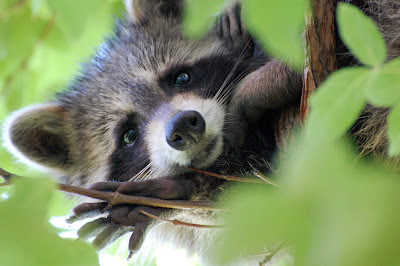
A raccoon peering down from the branches. Click to enlarge.

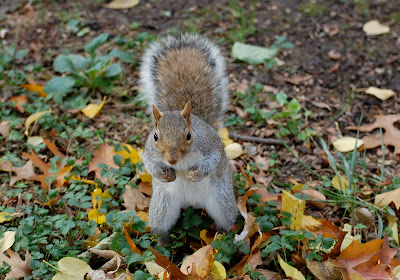
This squirrel looks ready to interact -- especially if peanuts are involved -- or to carry on if not. Today I am a just looking at some photos of my cute backyard mammals.

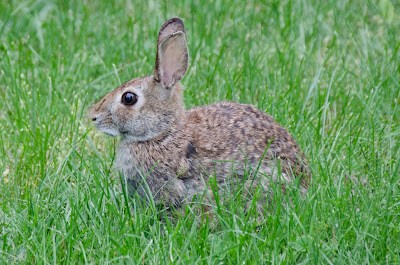
The rabbits are always alert and ready to run if I get too close. Actually all the animals are looking at me. I bet a lot more than the ones I see are watching me.

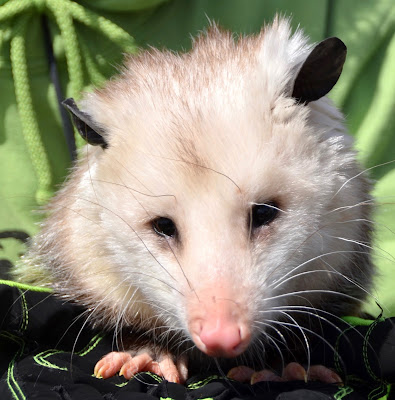
Here's a nice opossum. Not one that lives in my yard. You don't usually see them in bright daylight like this. This one is an orphan that works as a wildlife ambassador at a nearby refuge -- but the ones around here look exactly like it.  Note that she is also checking me out.

And this -- oh, wait. Nevermind. Ignore this one. The rest are frequent visitors to my suburban back yard.


Sunday, June 27, 2021

Raccoon This Morning


I woke up early today. So early that not all the creatures of the night had settled down to sleep. Like this raccoon lounging in the maple tree in my yard.

Looks very relaxed, right? I was going to blog about something else today but raccoons in the yard take precedence over everything.


I went out to take a closer look and the raccoon pulled its arm in, backed up, sat still, and did a raccoon mind trick: "This is not the raccoon you are looking for.You can go about your business. Move along." Then it turned around, curled up with its back to the door and disappeared. Click on the photos to enlarge.

Sunday, January 3, 2021

Creature of the Year Award


Competition was stiff for the 2020 Urban Wildlife Guide Creature of the Year Award. Congratulations to Turkey Vulture for first prize! It's not all about looks -- the vulture scored high on design. Visit the June 28 2020 blog by clicking here to read its story.

In the event that the vulture is unable to fulfill duties as Creature of the Year, the first runner up Raccoon Family will step in. See more in the August 9 blog by clicking here.

Happy New Year! Click me.


Sunday, August 9, 2020

Raccoons


I was up early yesterday. Apparently earlier than raccoons settle down to sleep for the day, as I spotted this one gazing out of a tree near me. After taking this picture, I ducked away to watch, and then...
   

Sunday, June 21, 2015

A Walk in Central Park

Last week I led a nature walk in Central Park for the American Museum of Natural History's Membership Department. Even though I got rained on twice, there was a lot to see. Here are some of the wild creatures that were in the park on Wednesday.

Turtles were basking in The Lake. Red-eared sliders are the most commonly seen.  Click to enlarge.
Scanning the waters there often turns up a Chinese softshell turtle like this one. 
This ladybug pupa was in the bushes near the Ladies Pavilion. An adult  Asian multi-colored ladybug will emerge. The light-colored spines at the upper left are diagnostic for the species; I hear they are the remnants of the spiky skin of the last larval stage. 
This raccoon was hanging around the Oak Bridge. 
A pair of Paria beetles was mating on a leaf. 
An ant-mimic spider lurked. 
This Isodontia wasp glittered in the fleeting sunshine. 
A green Agapostemon bee posed on a pink rose. 
And the Shakespeare Garden was full of blossoms. 


You never know what you will find when you  take a walk in the park, but... John Muir once said: "In every walk with nature one receives far more than he seeks."

Monday, May 6, 2013

A Walk in the Park

Central Park is full of pleasant spring sights right now. 

American robin, Turdus migratorius. Click on the photos to enlarge.
Raccoon, Procyon lotor
Red-eared slider turtles, Trachemys scripta.
Male wood duck, Aix sponsa
"It is spring again. The earth is like a child that knows poems by heart." Rainier Maria Rilke

Sunday, July 8, 2012

Brooklyn Porch Raccoon

A raccoon appeared on my porch fence last weekend. It paused to look at me while I snapped this picture. Click to enlarge.  
Eventually it climbed a small tree that overhangs the porch, and snuggled into a fork of branches, looking down at me. 
It was about 9:00 a.m. on a Saturday morning and past a raccoon's bedtime. Nocturnal creatures like them usually go to bed in the morning and sleep all day. Raccoons typically maintain foraging territories that contain a few sleeping spots that they use regularly. I had to leave for a trip and when I got back the following day the raccoon was gone, presumably after spending Saturday sleeping in my tree. It must have been a very noise-tolerant raccoon to put up with the clatter of the Brooklyn-Queens Expressway.

Raccoons fit into urban settings remarkably well, though we usually don't know they are there. Cities and suburbs provide them with regular meals at trash cans, gardens, pet food dishes, and also shelter in garages, attics, sewers, chimneys, and roof and wall spaces. Hollow trees are a popular favorite if they can be found. The New York State Department of Natural Resources estimates that there are about 100 raccoons per square mile on Long Island. In Central Park, I frequently see a large raccoon sleeping on branches that overhang Strawberry Fields, unconcerned about and usually unnoticed by tourists below. And I've seen them dodging skaters, joggers, and cyclers on busy summer nights on the park drives. They may start out shy, but they can overcome that!

The raccoon is a native American animal about the size of a small dog. It has unusual soft-skinned humanoid hands with five fingers that are not joined by webbing. It has a tail with five to seven dark bands. And it wears a famous bandit mask.

Masks make them look cute and mischievous to us, but why do they have them? Some scientists have hypothesized that the masks reduce glare like the grease marks football players wear under their eyes. Others suggest that masks protect a raccoon's eyes during fights by concealing them against a dark background. Still others think that masks enhance group cohesion and raccoon-to-raccoon communication. But raccoons are solitary and nocturnal, doing most of their business alone in the dark, so these reasons don't quite explain the mask.

In 2005, the scientific team of Newman, Buesching and Wolff compared the habits and habitats of raccoon-like masked mammals worldwide -- animals like badgers, coatis, skunks, wolverines, and others. (Click here to read the original paper.) They found that the masked animals have other things in common. They are mid-sized, terrestrial, not very fast, and share territories with at least one larger carnivore. If raccoons or their masked counterparts are attacked on open ground they will probably stand and fight, being unable to escape by running away. But despite their small size and slow speed, none of the little masked animals are easy prey. In a fight with a bear, a coyote, or a bobcat, the raccoon would probably lose but could do a lot of damage. The study concluded that the raccoon's mask is a form of aposematic coloration -- a visual announcement that raccoons are dangerous. An animal (or insect, or plant) with aposematic coloration wears a color or bright pattern as a warning. Raccoons typically hunt for food with their noses to the ground, so the bright contrasting face is not seen until they raise their heads. The bold black and white facial pattern is visible at night. They can lift their faces and reveal the pattern suddenly and startlingly.  Predators learn to avoid raccoons.

People should avoid them too. They look cute but they can be dangerous and should be viewed from a distance.