Showing posts with label Brooklyn Bridge Park. Show all posts

Monday, May 8, 2017

Coming Soon

I'm going to be in places without Internet service for a week or two, so I'm posting a preview of coming attractions. This crow is the subject of an upcoming blog -- maybe this Sunday but possibly the next. 
The story will also feature this delicious lox cream cheese bagel. 
And be set against the lovely background of Brooklyn Bridge Park on Pier 6.
Click to enlarge and stay tuned. 

Monday, September 26, 2016

More Flickers

Last week I wrote about the northern flicker that landed in the tree by my window. Here's a few more of them, this time on the grassy lawn that overlooks New York Harbor on Pier 1 of Brooklyn Bridge Park. There was a flock of flickers there this weekend. I was alerted to it by Heather Wolf who has taken pictures of ALL the birds in that park. Click on this link to see them: http://brooklynbridgebirds.tumblr.com. You can tell that the flicker pictured above is a female by her unmarked face. 
The male has a black mark on his face, usually called a mustache, but technically a malar stripe.  Click to enlarge. 
The male also has a red crescent on its nape -- just like the female's. Both have dark tipped bills this day because they've been probing in the mud for tasty invertebrates. 


Sunday, July 10, 2016

Goats at Work

Four goats are at work eating weeds in Brooklyn Bridge Park. It's a big improvement over lawn mowers of the more common sort. This guy is on the job right now. The name on his collar says Hector. Click to enlarge. 
Here's another one. His collar (from a different photo) says Horatio. They are nubian goats. The park hired them for their eco-friendly ways and their climbing skills to trim the steep slopes of the noise-attenuating berm at the Pier 3 uplands. 

I've seen them a few times from the Brooklyn Heights Promenade when they are on the east side of the berm. Can you see them in this photo? Follow the line of the crane down to the crest of the hill. Goats are a big surprise in this setting for people who are not expecting them. 
Here is a more magnified shot from the same vantage. The other two goats are called Minnie and Eyebrows. They all spend their nights in a shed and they are on the job every day, munching away inside a fenced enclosure. 

Go take a look at them if you are near. But don't feed them or they won't do their job as well and don't disturb them -- just look. They are way cool! 

Mmmm... tasty weeds. 

Sunday, January 11, 2015

Isolated Pigeon takes New York


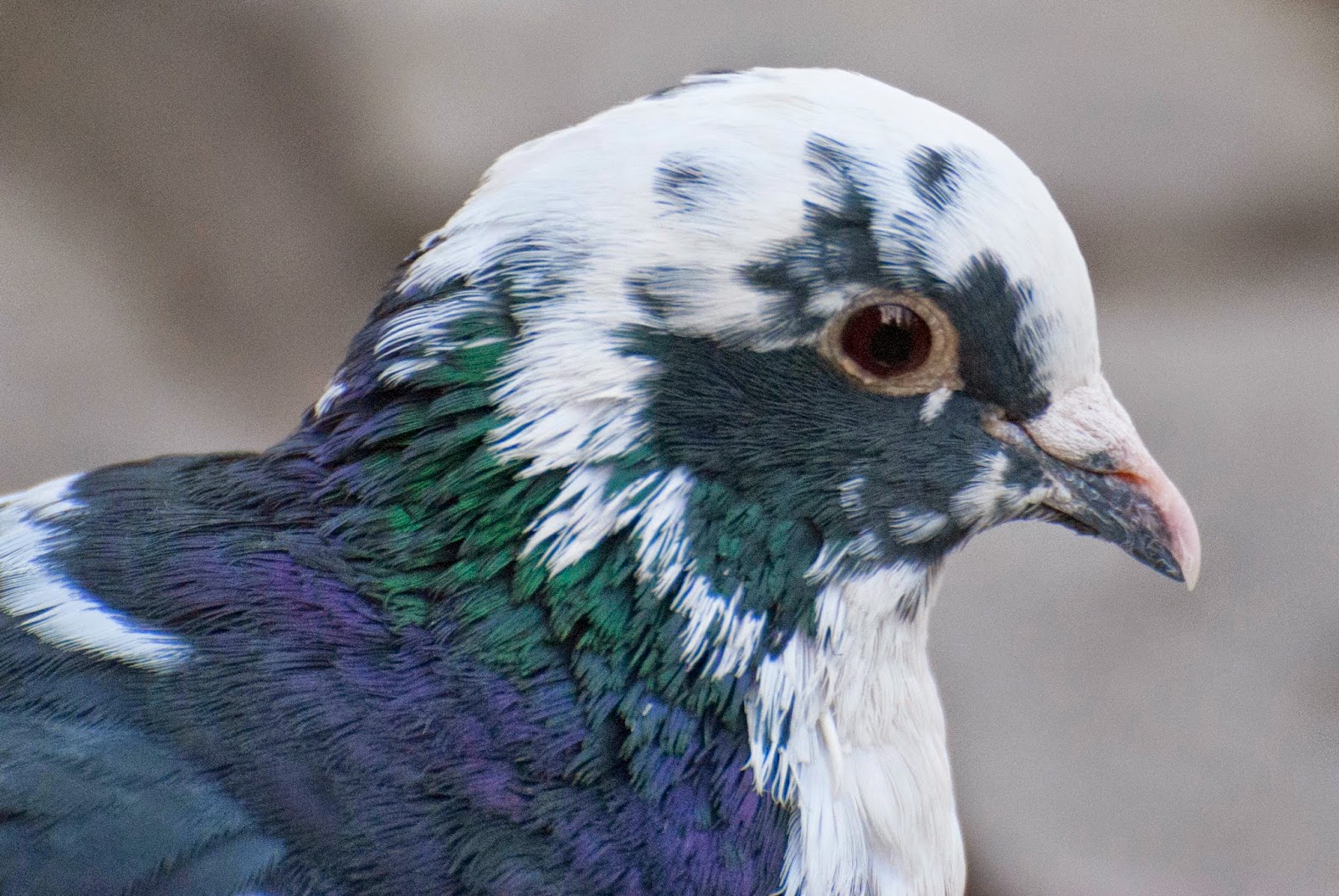
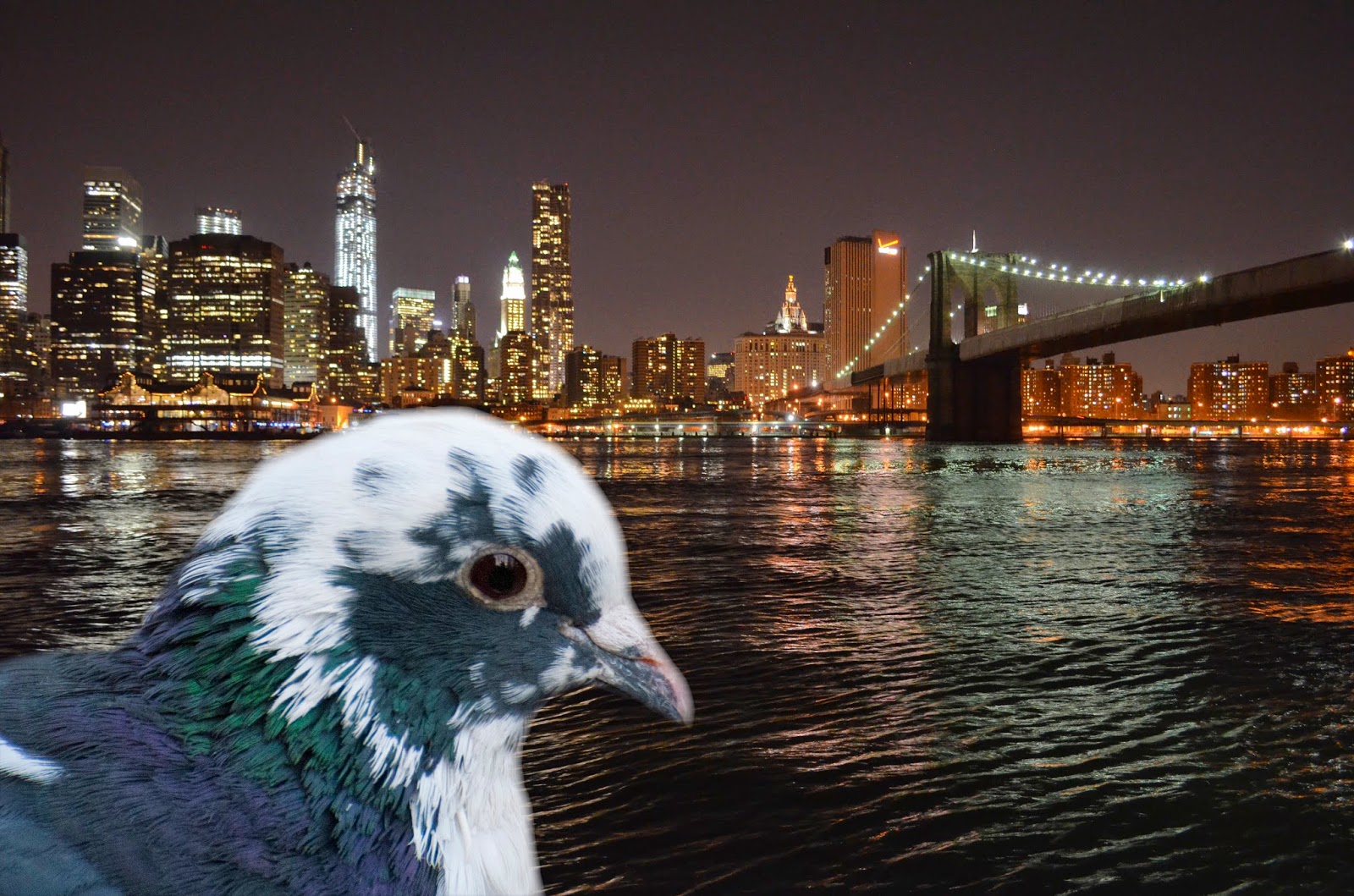
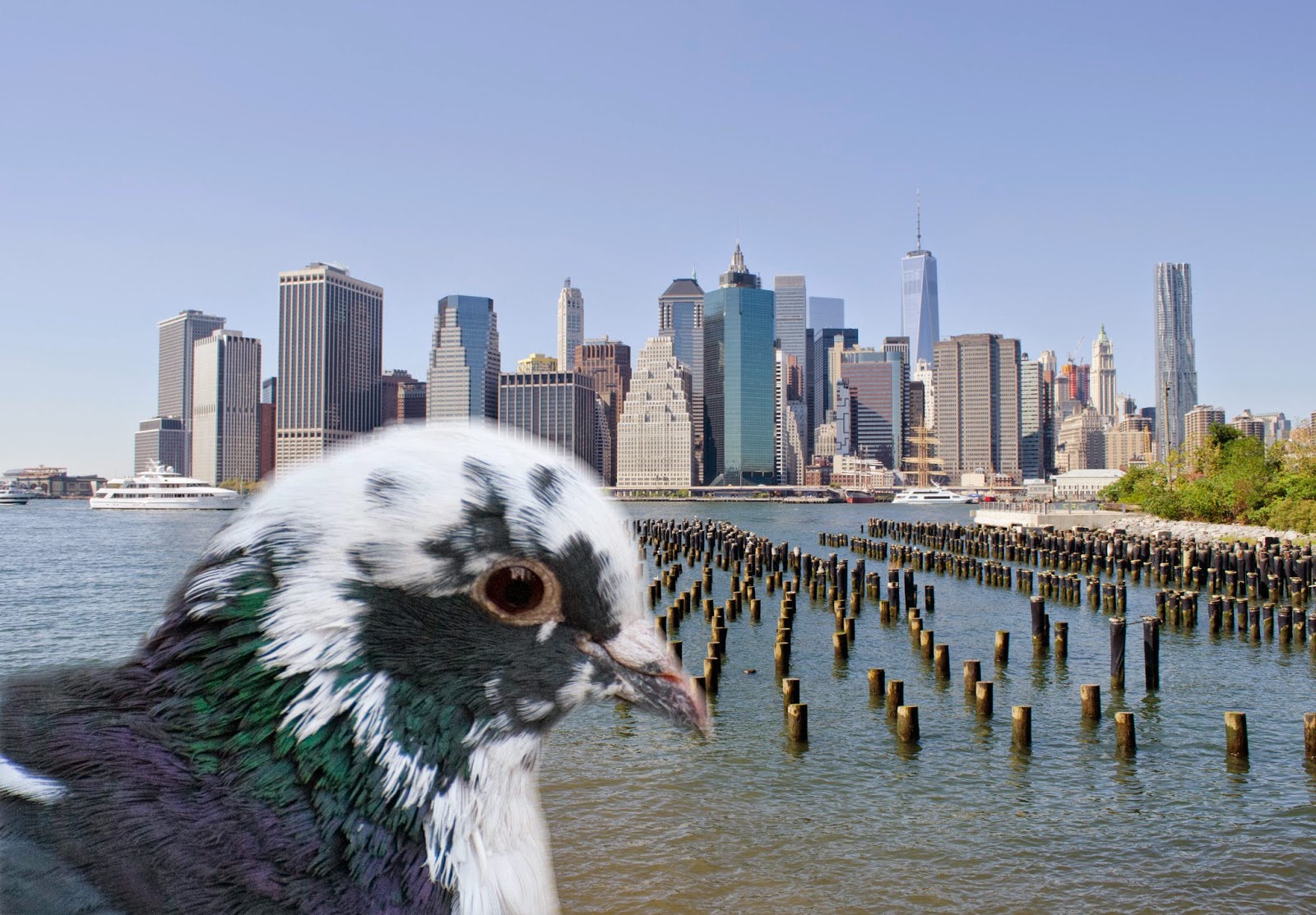
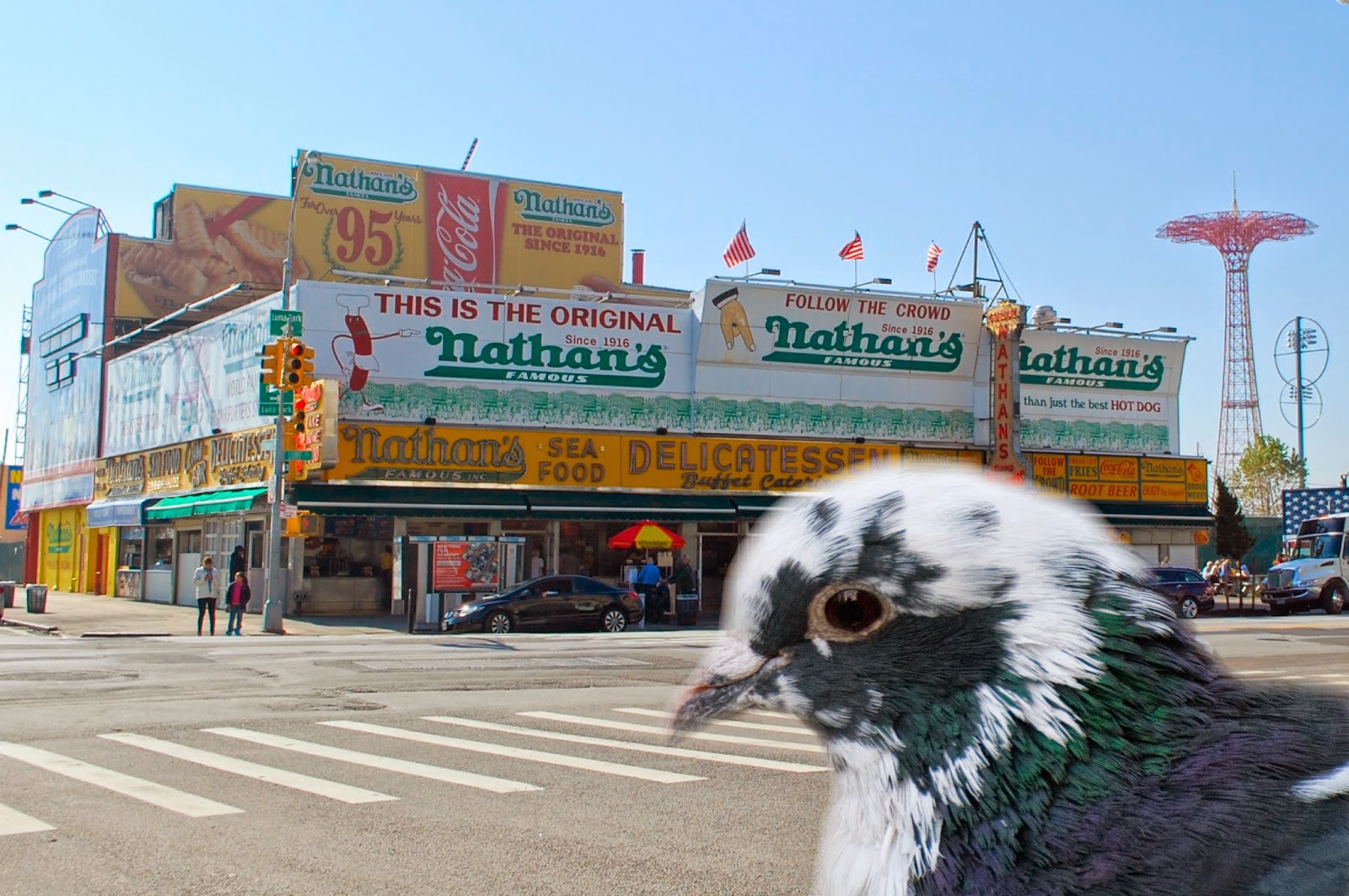
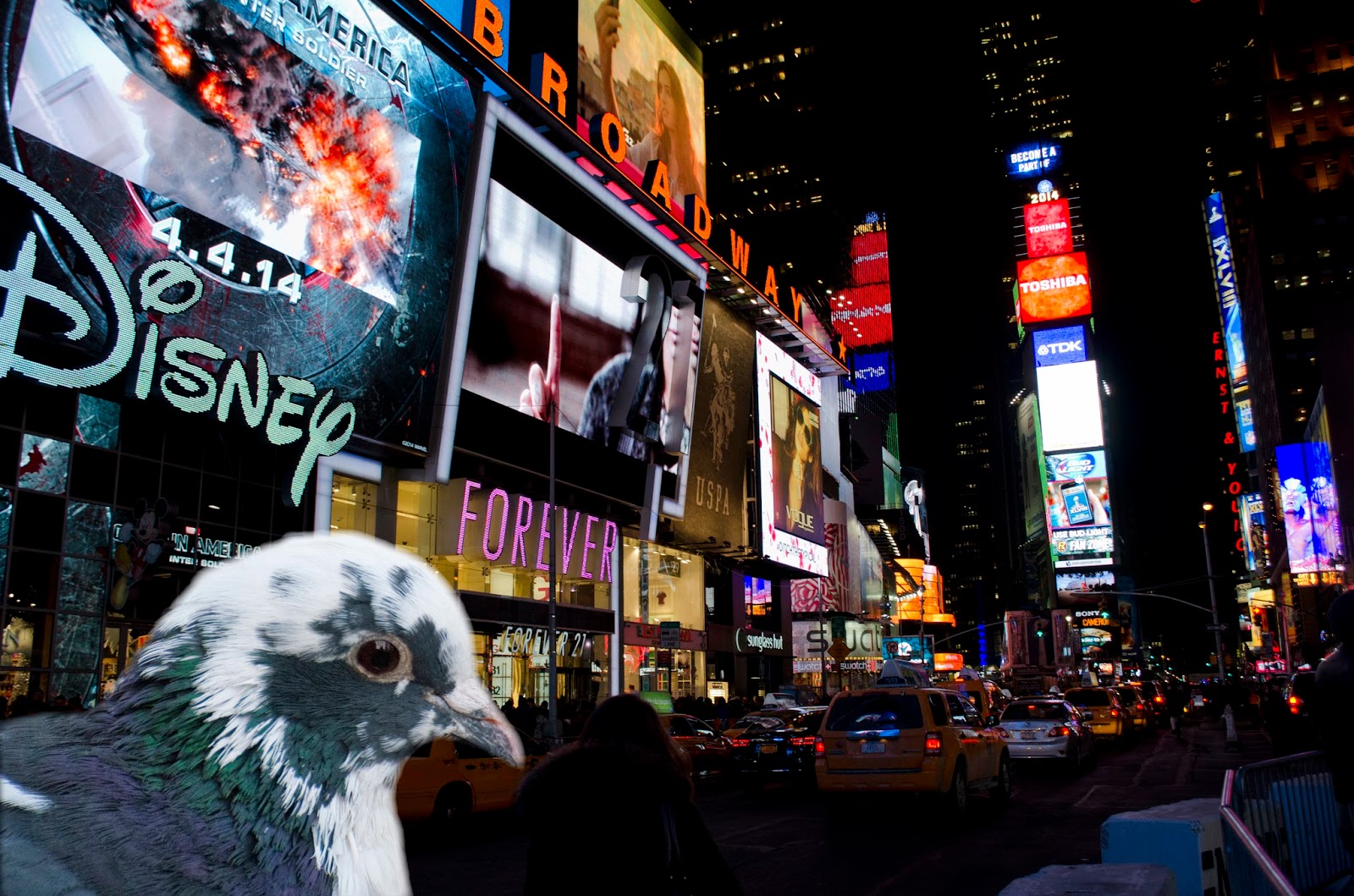
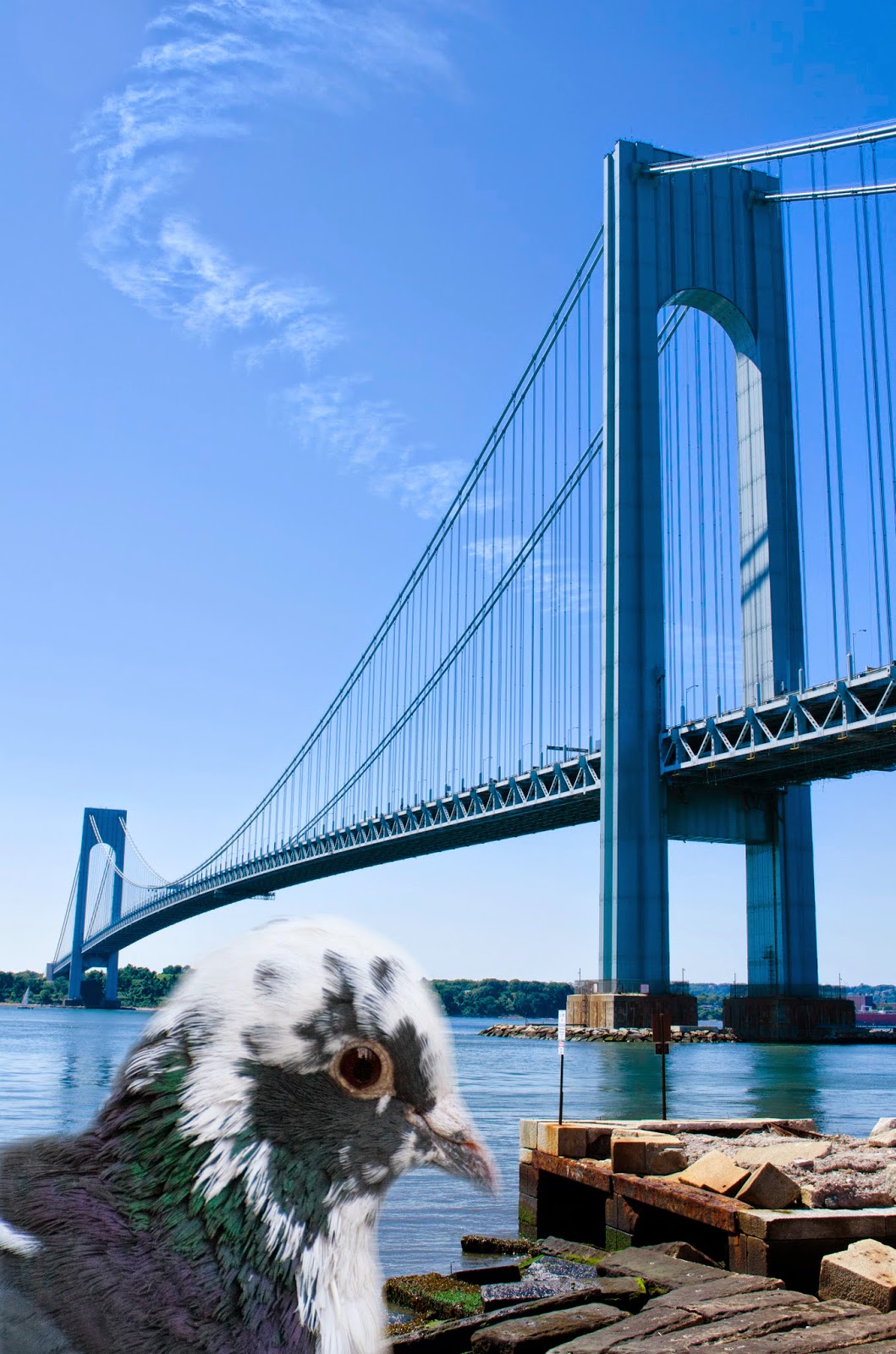
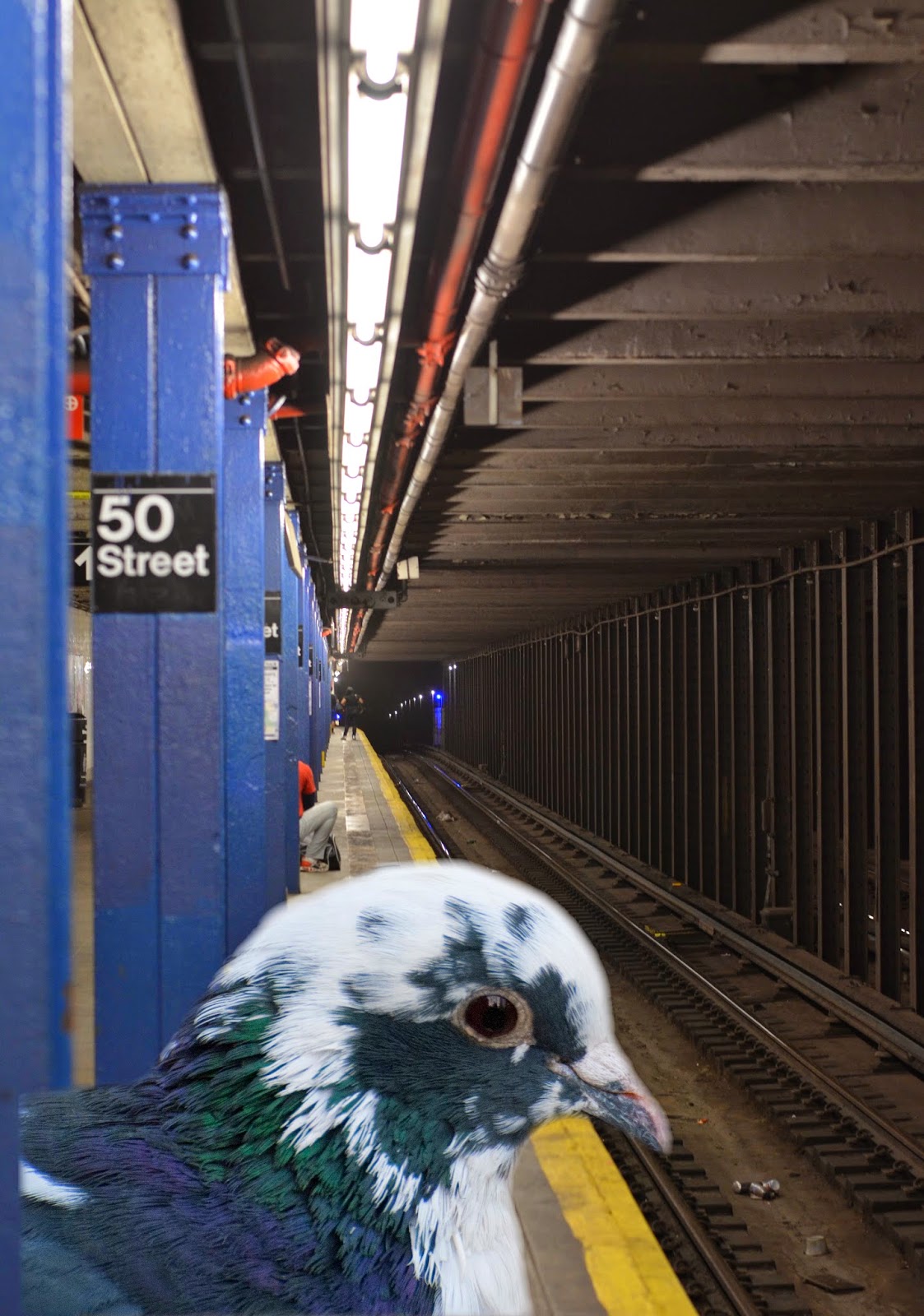
This week's story is less about urban wildlife than it is about my new Wacom graphics pad, although it does include a pigeon. I already knew how to isolate parts of photos using Adobe Illustrator, but a graphics pad makes it much easier. So I wasted an hour isolating a pigeon and dropping him into photos around New York. There is a brief description of the method at the end. It's a useful technique to make nice graphics for presentations. I am starting with this photograph of a pied pigeon. Click to enlarge. 
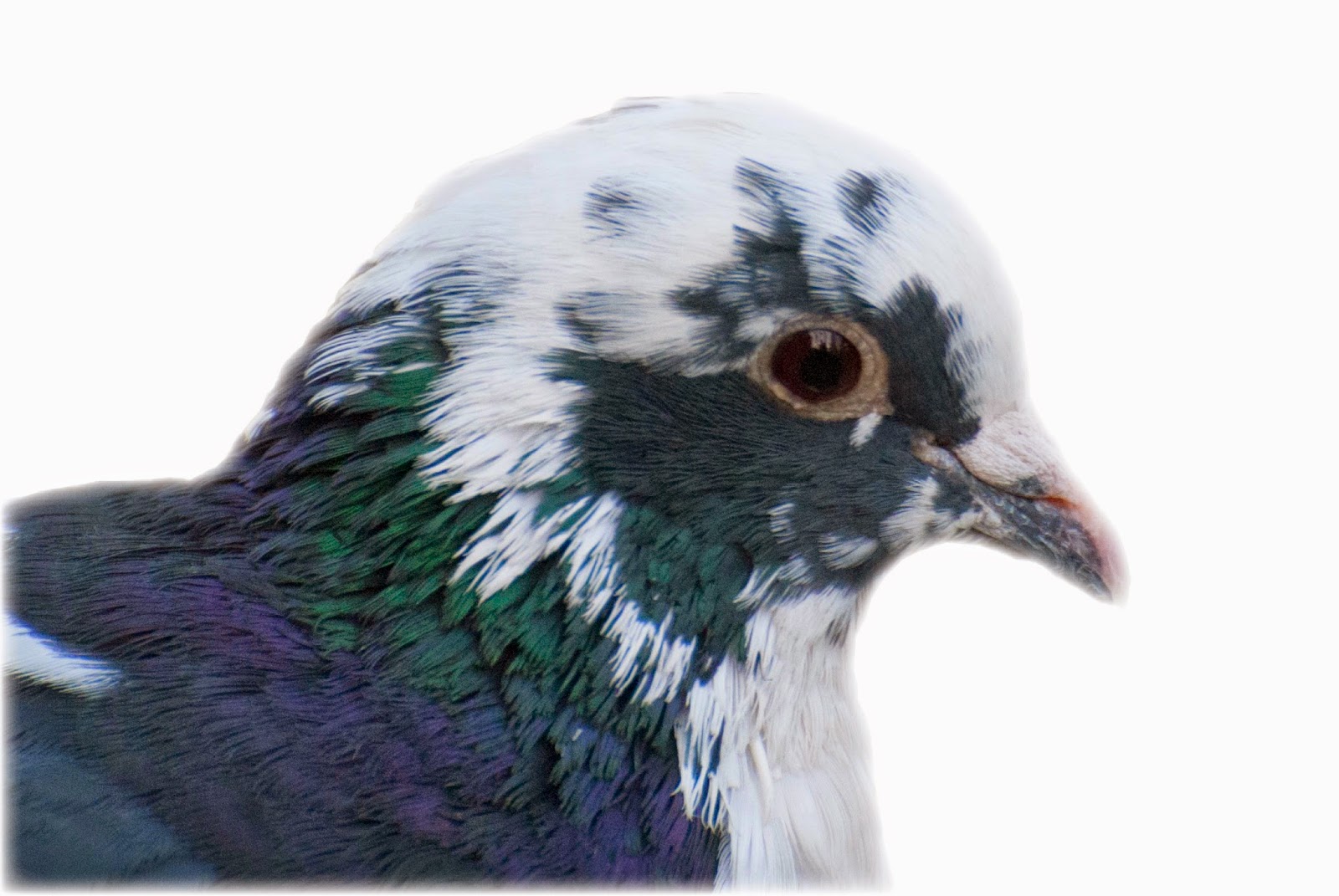
The pigeon has been extracted from the background. 

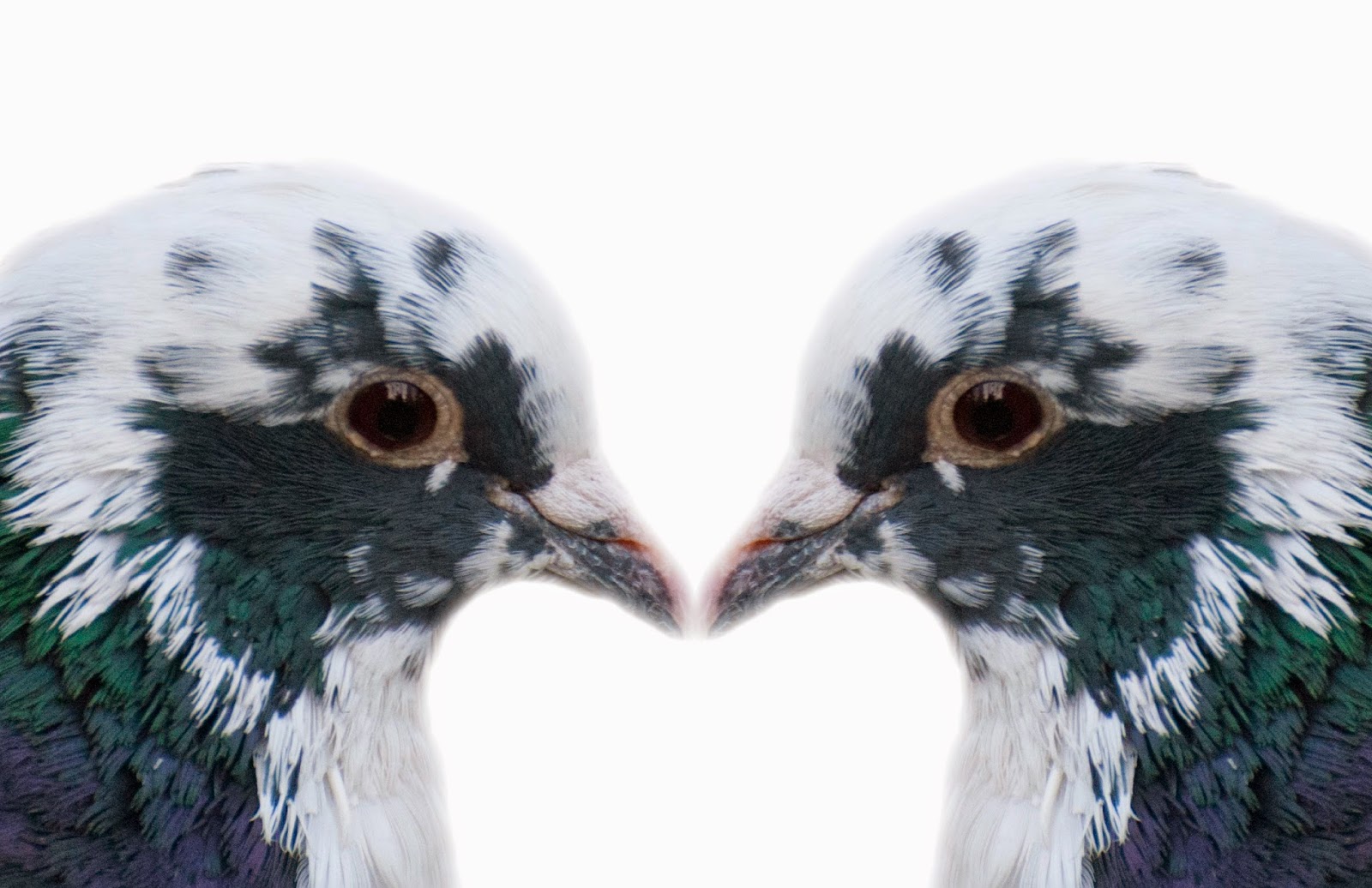
Once isolated, it is easy to duplicate and reflect the image. 

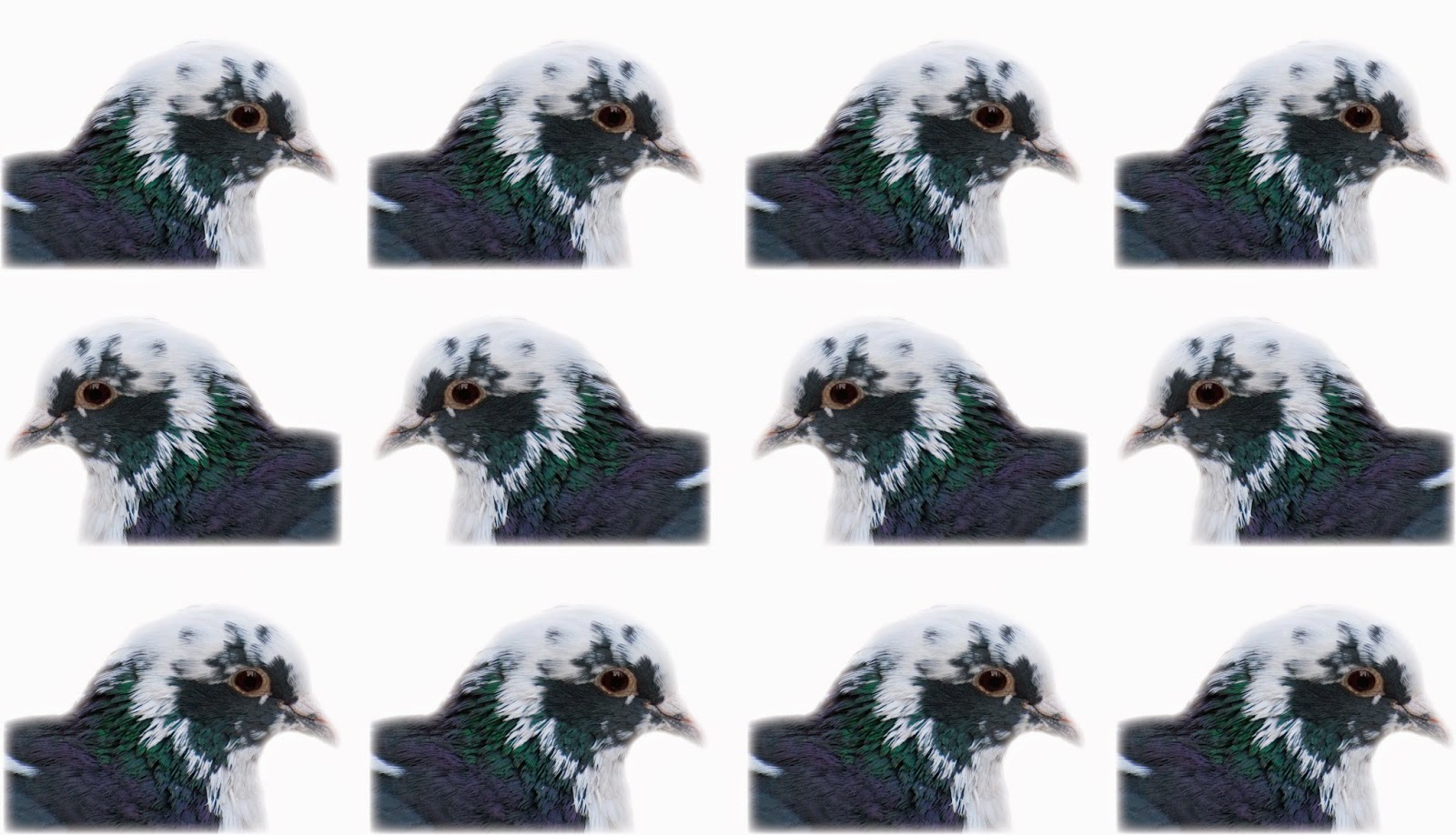
Or to duplicate and reflect lots of them. 
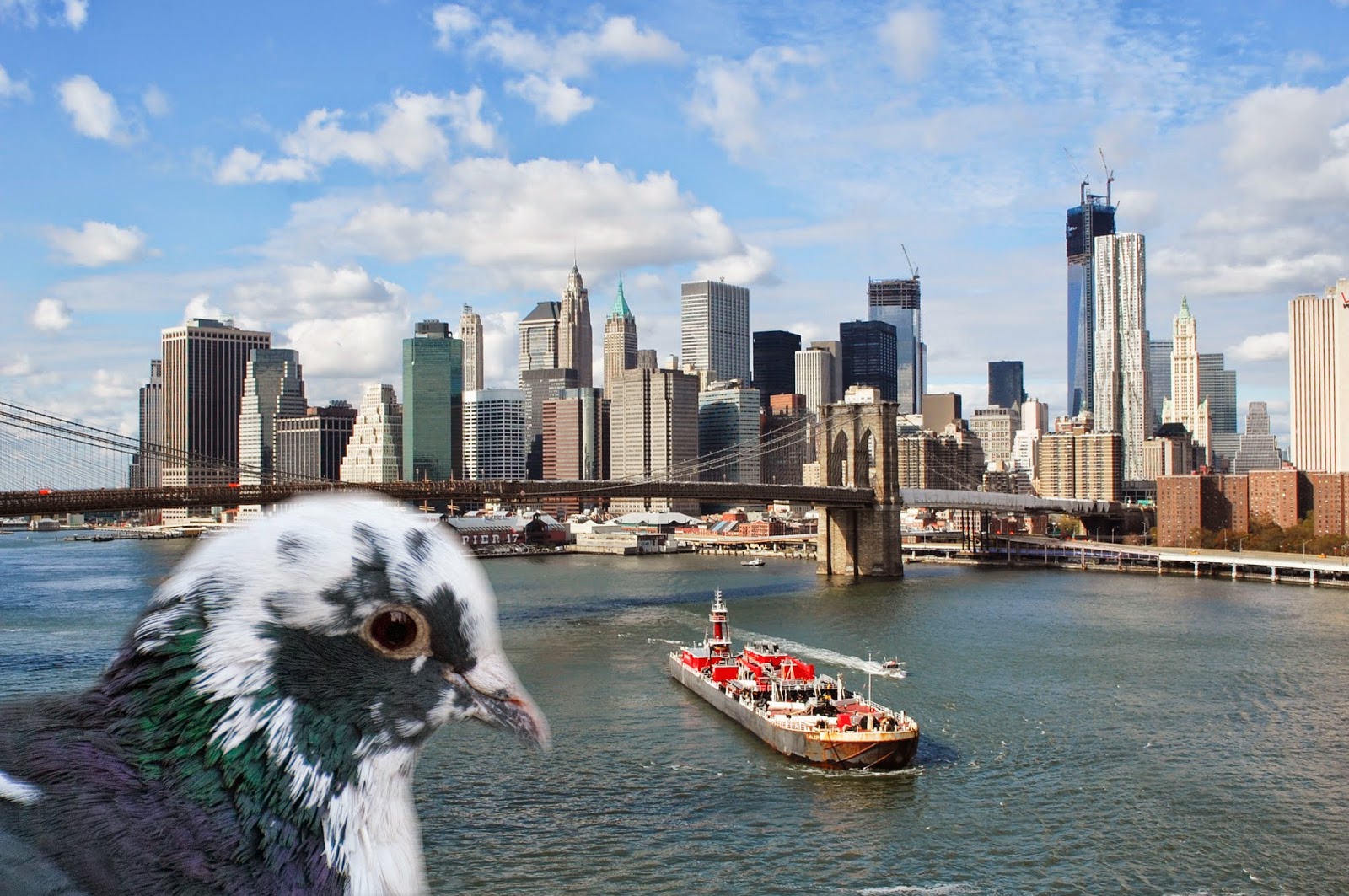
Or to drop him into the action at the Brooklyn Bridge. 
Or on the shore of the East River. 
Or Coney Island. 
Or Times Square. 
Or taking in the view from the Manhattan Bridge. 
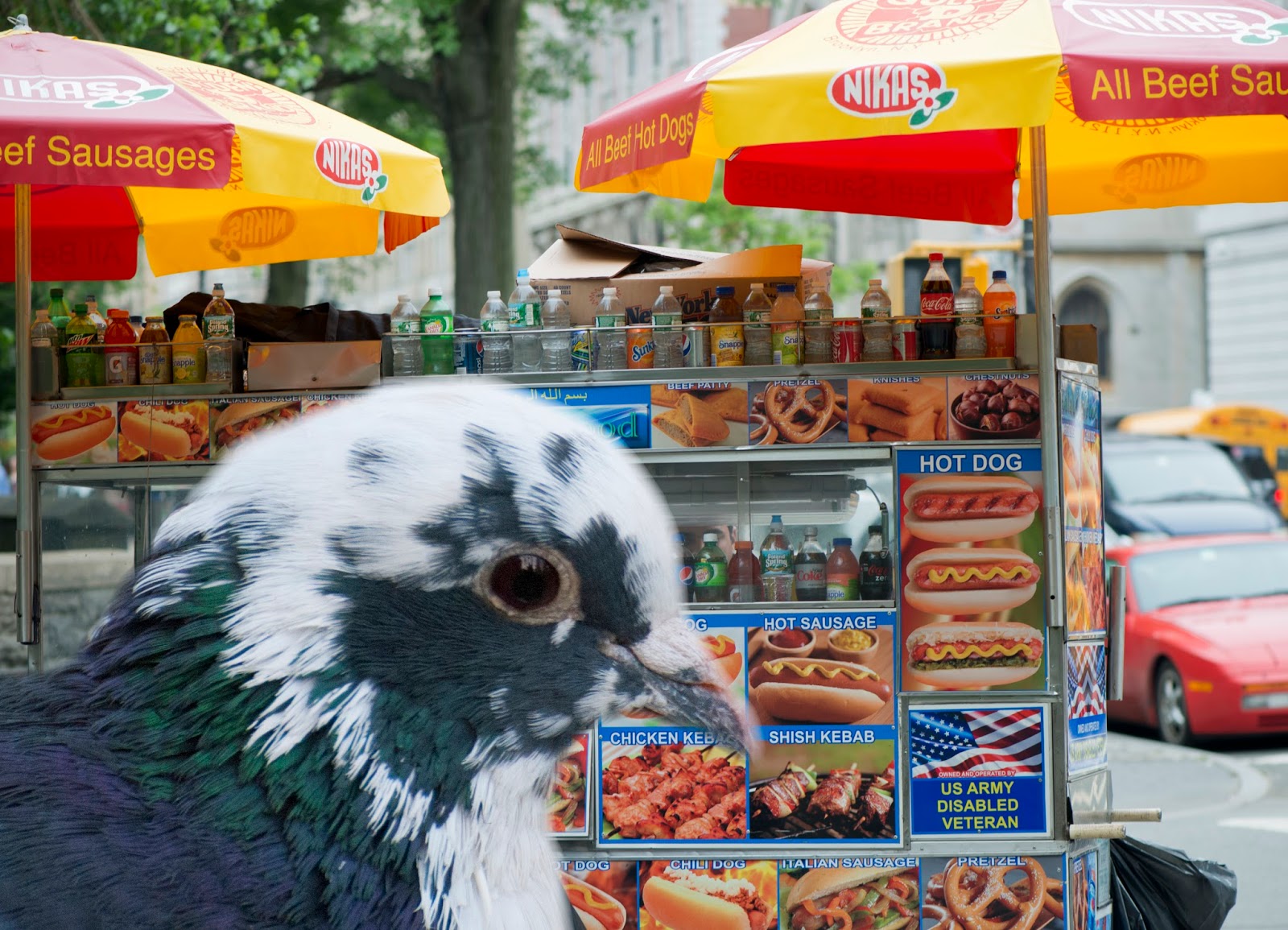
Picking up a snack. 
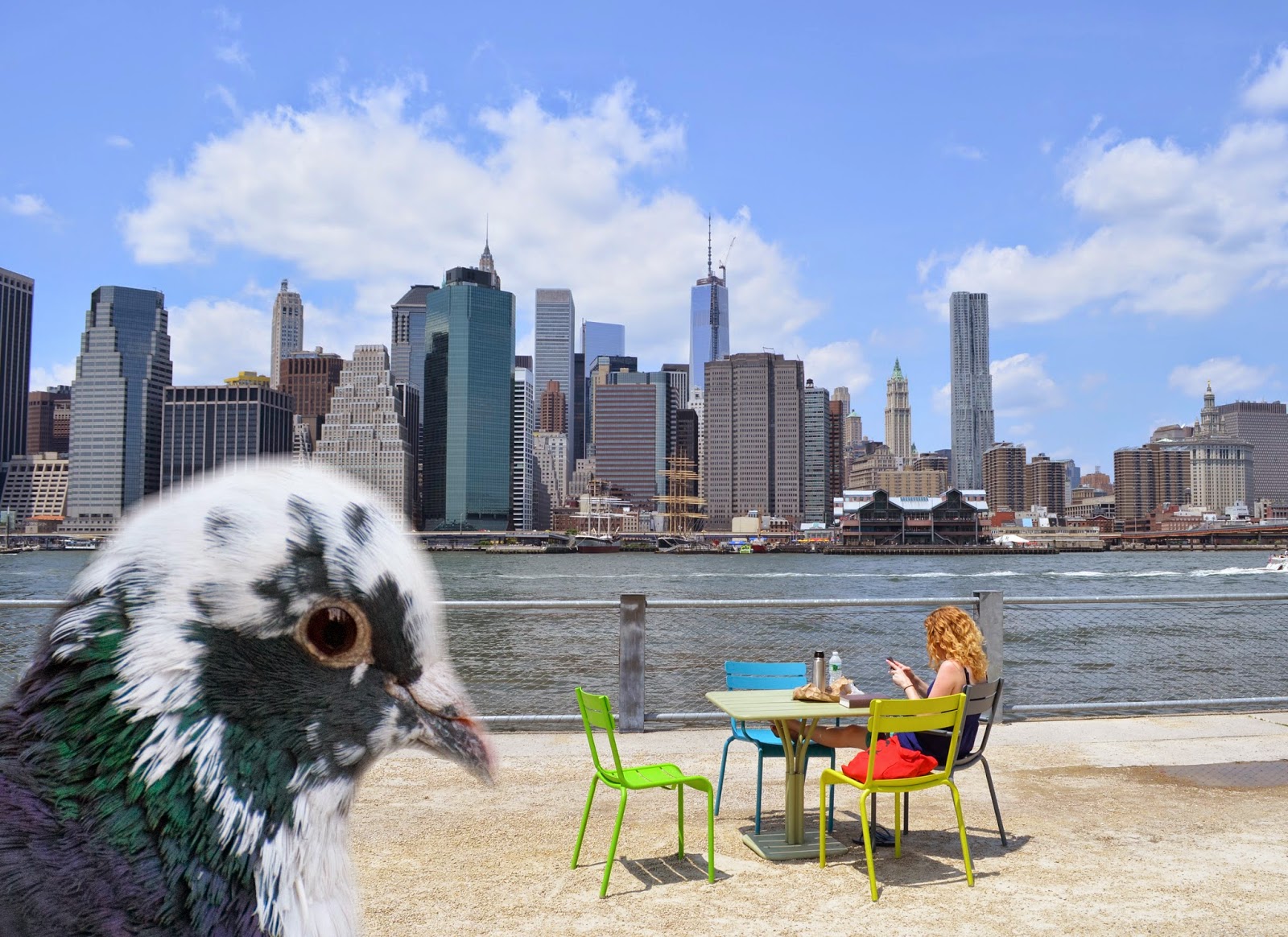
Hanging out at Brooklyn Bridge Park. 
Stayin' alive.  


You get the idea. Here's how to do it on a Mac. Open the photo that contains something you would like to isolate, like a pigeon, in Adobe Photoshop. (I have version CS5.1.) Use the pen tool to outline the thing you want to isolate. (This is MUCH easier if you have a graphics pad plugged into the computer because you can outline with an actual pen in your hand instead of a mouse.) The outline will be a series of dots connected with lines. Use more dots where the shape of the edge is more complex. Work your way all around the edge and join the last dot to the first. Then open the "Paths" window in Photoshop and choose "load path as a selection." From the "Layer" menu, select 'New" and then "layer via cut." Look at the layers panel and you will see two layers -- your newly cut out image and the background it came from. Discard the background by dragging it to the layers panel trash can. What's left is the isolated image. Save. Then open it in Adobe Illustrator (I have CS5.1) and select "feather" from the "Stylize" menu to soften the edges of the cutout. After that, do whatever looks good -- change the size and orientation or paste it into other photos. When you have finished a creation, use the art board tool to crop as desired. I usually save as an .ai file, then open with Preview, export, and save as a .jpg. 

Waiting for the C train. 

Sunday, September 28, 2014

Chinese Mantis

The Chinese mantis, Tenedera sinensis. Click to enlarge. 
The Chinese mantis is remarkably easy to overlook for an insect that is five inches long. This one was blending in among leaves and flowers along a fence on Pier 1 in Brooklyn Bridge Park.

The mantis is a predator that sits quietly waiting until its (mainly) insect prey is within striking distance; prey can be almost any kind of fly, bee, spider, moth, or similar thing. It quickly grabs the victim with its spiked forelegs, impaling and holding it, and then eats with a mouth that cuts and tears.

The Chinese mantis is native to Asia. It was accidentally introduced to the United States in the late 1800s and spread. Gardeners now deliberately release them for biological control of plant pests and Chinese mantises are kept as pets. They consequently can be found in the wild throughout the the country.

This is one of a few kind of mantises that you might encounter. I wrote previously about a Carolina mantis (Stagmomantis carolina) that I also saw in Brooklyn Bridge Park -- in the same spot! You can see that blog and compare the two mantises by clicking on this sentence.

It seems that Brooklyn Bridge Park is a good place to find mantises. I'll bet it is because of the variety of tasty prey that results from the thoughtfully chosen plantings. Look for mantises near blooming flowers by the Pier 1 section of fence that borders the wide gravel road on the eastern side of the park.

The surface of the mantis' wing case looks deceptively like a dry leaf. 
If you don't know it's there it is easy to overlook. 
But when you get up close, you'll find it is watching you. 

Sunday, October 6, 2013

Picture-winged Fly

This is Delphinia picta, a picture-winged fly. Click on the photo to enlarge. The fly gets its common name from its striking wing pattern; it has two white triangles on the leading edge of each wing and a few decorative white swirls on a shiny brown background. Very attractive!  
Head-on, the fly looks like it is wearing a tiny gas mask. As it walks, it  moves its wings in  a rowing motion. 


Picture-winged flies lay their eggs in rotten vegetation. The larvae spend a few weeks feeding there, then pupate for a few weeks, and then emerge as adults. When the weather cools, late season larvae crawl into the ground and become quiescent for the winter. They following spring, they wiggle upward, pupate, become adults, and start the cycle again. 

I saw numerous picture-winged flies sunning themselves on benches in Brooklyn Bridge Park this summer (I'm assuming they were sunning, but maybe they were speed-dating). The next generation is surely sleeping under the grass now, not to be seen again until next spring . 

Sunday, March 24, 2013

Sleeping Birds

Three ducks have settled down to sleep on the shore of the pond on Pier 1 in Brooklyn Bridge Park, pictured here. They are near the left. Their heads are tucked into their back feathers. They can barely be seen. Click to enlarge the photo. Mallard ducks are famous for sleeping vigilantly; they can literally sleep with one eye open, using half of the brain. A row of sleeping ducks often has a sentry on each end, each keeping an eye out for danger. 

Gulls are dozing on pilings nearby in the East River as night falls on New York Harbor. 

Sunday, March 17, 2013

Last Blog of Winter!

Brant geese on pilings in the East River at Brooklyn Bridge Park.
Click on the photos to enlarge. 
Click here to read a previous blog comparing brant geese, Branta bernicla, and Canada geese, Brant canadensis


The geese awake
"snow is melting!
melting!"

Haiku by Issa, 1763-1827

Sunday, February 3, 2013

Along the East River

I took a cold walk by the East River today. Brant geese, Branta bernicla, were lunching on the lawn in Brooklyn Bridge Park. 

Brant are often mistaken for Canada geese, but they are different species. I've written about their differences; click here for that blog
The lawn the brant geese were trying to eat turned out to have too much human traffic for comfort. The flock flew away, silhouetted against lower Manhattan. 
There was a female red-breasted merganser, Mergus serrator, dozing among the pilings south of Pier 1. She had her head turned back and her beak tucked into her feathers. She didn't raise her head, but she was watching me. Expand to full screen, and click to enlarge the photo and you will see her dark eye. Also note the crazy hairdo, and the Dr. Seuss-like reflection of her head in the water. I have written about this duck before; click here to see a picture of the red-eyed male
Beautiful ring-billed gulls, Larus delawarensis, were riding the river swells, pecking tidbits from the water. 
Click on the photo to enlarge. 
Other ring-bills were dining on takeout. 
And the flag on the Brooklyn Bridge was at half mast for Ed Koch. 

Sunday, November 4, 2012

Pine Siskins at the Brooklyn Bridge

Brooklyn Bridge Park and Manhattan. Pine siskins have moved in!
I saw a flock of pine siskins in Brooklyn Bridge Park a few weeks ago. Just behind the row of red bushes in the photo above, the little birds were collecting seeds from plants and grasses. They chatted softly while they flitted from plant to plant, sometimes fluttering to stay balanced while perching on the end of a stem. When pine siskins fly we see flashes of yellow feathers on their wings and at the base of the tail.

Little pines siskins, Spinus pinus, are easy to overlook. They are about five inches long and only weigh about half an ounce. They are mainly brown with streaks on body and head. 
Yellow wing edges.
Pine siskins are residents across southern Canada and at high elevations of the western United States. They breed in western Canada. In winter they sometimes migrate south, or irrupt, into other areas. They move further south in eastern North America and into lower elevations in the west. Changes in food availability are thought to inspire irruptions. Some years the siskins stay put, other years they suddenly appear in New York parks and gardens.

Pine siskins eat seeds of conifers like pine, cedar, hemlock, larch, and spruce. They also eat seeds of birch, sweet gum, maple, and alder. And they eat the tiny seeds of grasses, dandelions, ragweed, and other plants. They occasionally snack on an insect or spider. They are happy to come to feeders for thistle and sunflower seeds.

Pine siskins sometimes travel with other irruptive migrants like crossbills, redpolls, purple finches, evening grossbeaks, and goldfinches. Birdwatchers call these the winter finches; I hope to see some of them in Brooklyn Bridge Park, too! But the park has been closed for a week because of hurricane Sandy and has just reopened. I'm on my way out to look for finches. I'll report back.

The siskins may have been carried far away by the storm. (Click here to listen to a short NPR interview describing how birds can travel inside a hurricane's eye.)