Showing posts with label Neotibicen tibicen. Show all posts

Sunday, August 21, 2022

Dog Day Cicada Time


Dog day or annual cicadas are starting to get noisy outside. Males are singing to attract mates. There's more than one kind of annual cicada, with different species singing different songs and at different times of day or night. They sing with an organ called a timbal which is made of ribbed membranes that change shape with a click when pulled on by muscles. The clicks are amplified by hollow chambers in the insect. Click to enlarge. 

Here's a periodical cicada for comparison -- not what's singing now. These are the famous red-eyed ones that emerge in spring and early summer in 13 and 17 year cycles.
Some annual cicadas appear every year, but life cycles of individuals take from 2 to 5 years. They begin as eggs laid in slits on tree branches. (After the singing and mating is done.) The eggs hatch, nymphs fall to the ground and burrow down. They suck juices from plant roots, and eventually reach their last nymphal stage. Then they dig their way back up above ground, climb onto something and shed their skin and emerge as adults.

But here's a problem for dog day cicadas -- a big wasp known commonly as the "cicada killer."At about an inch and a half long, the cicada killer is one of our largest wasps. The huge size makes them look dangerous, but they are not aggressive -- except to cicadas.


When a female cicada killer is ready to lay eggs she digs a nest in the ground. (Lawns, planting beds, and the edges of concrete slabs are favorite sites.) Then she hunts for a cicada. She will sting it to paralyze it and then carry it to her nest. She'll push the cicada in and may go back to find another. After the nest is provisioned to her satisfaction she lays eggs on the paralyzed prey and seals the nest.

The eggs hatch into larvae that feed on the fresh cicadas their mother left for them. Then, plump and satisfied, the larvae become pupae and spend the winter underground. They dig upward to emerge from the nest the following summer. They fly around sipping flower nectar until the time comes to breed -- and to hunt cicadas. 


Sunday, August 26, 2018

End of August

I've heard people say that August is the Sunday of summer. 
Here's to the last Sunday of August 2018 and summer's end!
I've posted below a few favorite photos from my August blogs of years past. 

A great Egret coming in for a landing, trailing toes. Click to enlarge.

A monarch butterfly. 

Rolling hills of Northern New Jersey in August. 

A laughing gull line up. 
Honey bee drinking a drop of water from a leaf. 
A carpenter bee on milkweed flowers. 
A bullfrog keeping an eye on me.
Snow geese overhead. 
A bumblebee at work. 
A great black wasp. 
A summer azure butterfly with striped antennae.
A deer watching me watch him. 
A baby northern cardinal with punk hairdo. 
An elegant monarch butterfly caterpillar climbing upward. 


Sunday, August 5, 2018

Dog Day Cicadas

Dog day cicadas like the Neotibicen tibicen pictured above are chirping outside right now and have been at it for a few weeks. They are named for the dog days of summer when they appear. The dog days, traditionally early July to early August, are called that because the dog star, Sirius, appears in the predawn sky at that time. And the dog star is called that for being the brightest star we see in the constellation Canis Major -- the great dog. Click to enlarge. 

Here is my favorite cicada haiku. It's by Matsuo Basho

"The cry of the cicada
Gives us no sign
That presently it will die." 

Click here to read a previous blog about the lives of dog day cicadas. 

Sunday, August 16, 2015

Dog Day Cicadas

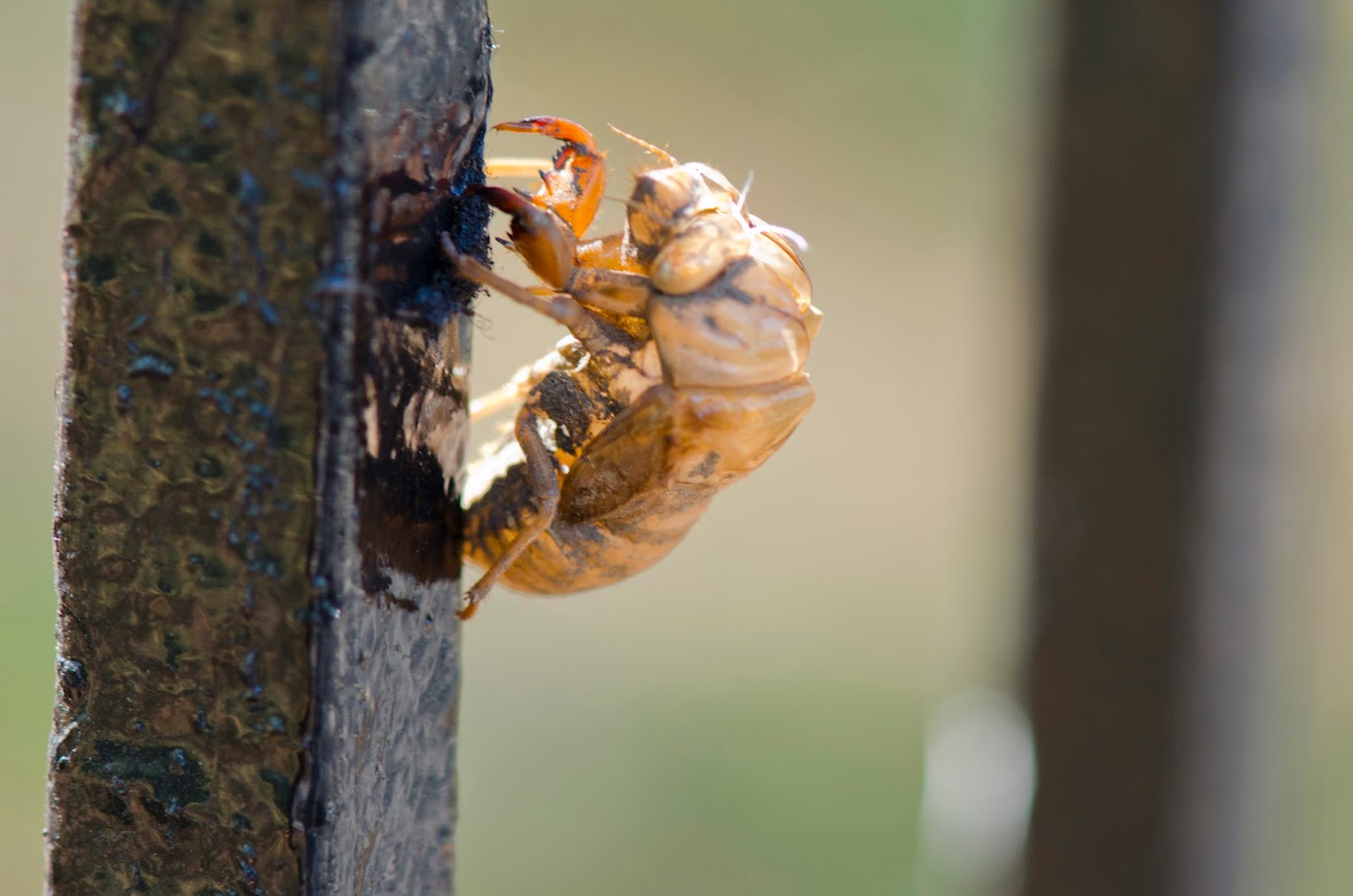
This empty cicada skin caught my eye. Click on the photos to enlarge. 
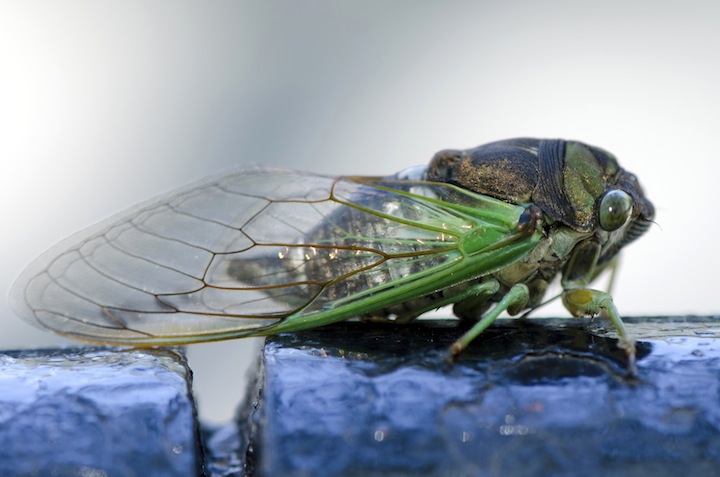
A few feet away on the same fence, I found this fresh looking  cicada.  It probably shed that skin a short time ago. It is one of the group of cicadas called dog day or annual cicadas that appear from June to late summer. This one is Neotibicen tibicen, called the morning cicada because the males sing early in the day. 
It is about 2 inches long. Notice the three ocelli or eyespots on its forehead, between the 2 large compound eyes. The famous periodical cicadas, the ones that emerge in 13 or 17 year cycles,  are smaller and have red eyes and emerge earlier in the year.
Here is a periodical cicada from the 2013 emergence, for comparison. Click here to read my eye-witness account of that event. 
Some annual cicadas appear  every year. But the life cycles of individuals take from 2 to 5 years, beginning as eggs laid in slits on tree branches. A nymph hatches, falls to the ground, and burrows down. It lives underground, sucking juices from plant roots, and grows. Eventually it reaches its last nymphal stage and claws its way upward to make an exit tunnel. It climbs onto something and sheds its skin, and emerges as an adult.

The males settle down and sings to attract females to mate. Different species of cicadas sing different songs and at different times of day or night. They sing with an organ called a timbal which is made of ribbed membranes that change shape with a click when pulled on by muscles. The clicks are magnified by various hollow chambers in the insect.

The dog days of summer were named by the ancients for the appearance of the dog star in the sky near dawn in July and August. We are in the dog days now; it's hot and humid, and the nights are loud with the songs of dog day cicadas.