Sunday, February 15, 2015

Bush Terminal Park

Tired of being kept indoors by the cold, I ventured out yesterday to look at this new Brooklyn park. It was pretty darned cold, about 25 F, and I didn't stay long. Click here for information about and directions to the park. Click here for a great place to have lunch while you are there. 
The park is surrounded by industrial waterfront buildings from an earlier age.  Click to enlarge the photos. 
In the park, a flock of cold-looking ring-billed gulls, Larus delawarensis, were standing on the ice. 
More cold-looking gulls hunkered down on the rocks. 
The rocks by the shore were icy. 
A few Canada geese, Branta canadensis, were walking through the dry grass. 
A pair of American wigeons (Anas penelope) swam by. The male is  on the left and the female on the right. 
A few rafts of bufflehead ducks (Bucephala albeola) swam offshore. 
One of the buffleheads caught an arthropod snack! 
Closer! 

Sunday, February 8, 2015

Defender of Raisins

Some American robins fly south in winter, but many stay north. Their diet changes from worms and insects to dried fruit and berries. They seem to go away but they have just left the lawns for other foraging grounds. Click to enlarge. 
Here is one of my winter visitors from last year. 
One day last week there was a mockingbird perched outside my window in the cold, first thing in the morning. I opened up and threw some raisins on the surface of the snow. The mockingbird was eating when all of a sudden a robin appeared. The robin flew in so close that the mockingbird had to hop out of the way fast to avoid a collision. Then the robin spread its wings and rushed at the mockingbird. There was a brief fight during which they tumbled in the snow with wings flailing. The mockingbird ducked out from under and flew away. Then the robin ate a few raisins and flew to the fence where he sat with his chest puffed out for a while and then flew away. Shortly after, the mockingbird came back and had some raisins anyway.

That afternoon, I looked out and noted the subzero temperature reading. There were sparrows on the fence, looking cold as the wind ruffled their feathers. All the raisins from earlier were gone so I tossed out a handful. A robin flew down and was eating when, to my surprise, an identical robin flew in and attacked. It seems that I have a couple of different winter robins visiting me for raisins, and one of them thinks my porch is his feeding territory and is trying to defend it.

That's what robins do. In winter, when they rely on dried fruit and berries for food, some individuals defend a good food source alone while others form flocks and work together to defend a good spot. On a recent snow day in New York City, I trudged down to Montague Street, the main street of downtown Brooklyn Heights. Staring out the window over lunch I started noticing robins in a tree. It slowly began to remind me of a scene from Alfred Hitchcock's The Birds, as I saw a second robin, and then more, and finally realized there were 10 of them in the same small tree. It was a fruit tree of some kind and they were eating the dried fruits. When the food is depleted they will search for another spot -- maybe they'll find the boundless cornucopia of raisins at my place.

Four of 10 robins guarding their fruit on a cold day in January.  (The tree is on the north side of Montague between Hicks and Henry.)

Sunday, February 1, 2015

Sea Hawk vs. Seahawk

This is an osprey, Pandion haliaetus, sometimes called a river hawk, sea eagle, or sea hawk. It nests near water and eats fish, diving with a dramatic splash and then rising with a fish in its talons.  
             Click on the picture to enlarge. 
I have a $20.00 bet on the Seattle Seahawks in today's Superbowl game, so I am on their side. Nevertheless, I want to point out that the live raptor they use as a mascot, the one that flies across the field just before the team runs on, is an Augur hawk, a bird native to Africa. It eats mammals, snakes, lizards, and birds -- it's really a land hawk.

OK, back to beer and nachos.

Sunday, January 25, 2015

More Bird Droppings

I wrote about bird droppings a few years ago. You can read that blog by clicking here. Since then, and entirely by accident, I photographed two more birds to add to that group of photos. Above is an immature peregrine falcon, Falco perigrinus. And below ---

An American Robin, Turdus migratorius. Click to enlarge. 

Sunday, January 18, 2015

Gray January Day

It is colorless and cold in New York today, hovering between rain and ice. Instead of going outside to look for winter ducks by the river, I am posting a picture from summer -- a bumblebee on a pink flower. It almost seems like it's from a different world, doesn't it? 

John Steinbeck wrote: "What good is the warmth of summer, without the cold of winter to give it sweetness."

And Albert Camus wrote: "In the middle of winter, I found there was within me an invincible summer." 


Sunday, January 11, 2015

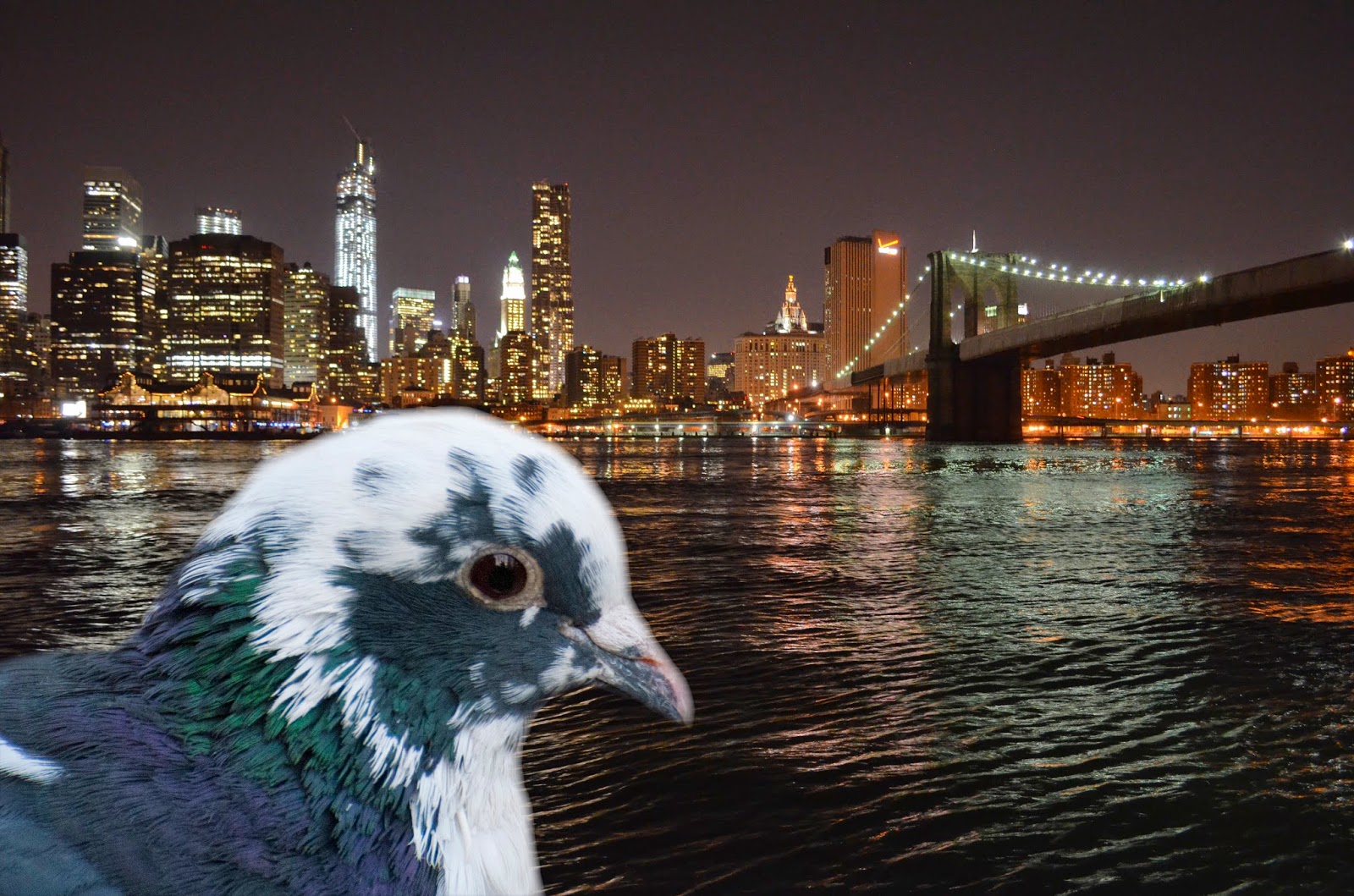
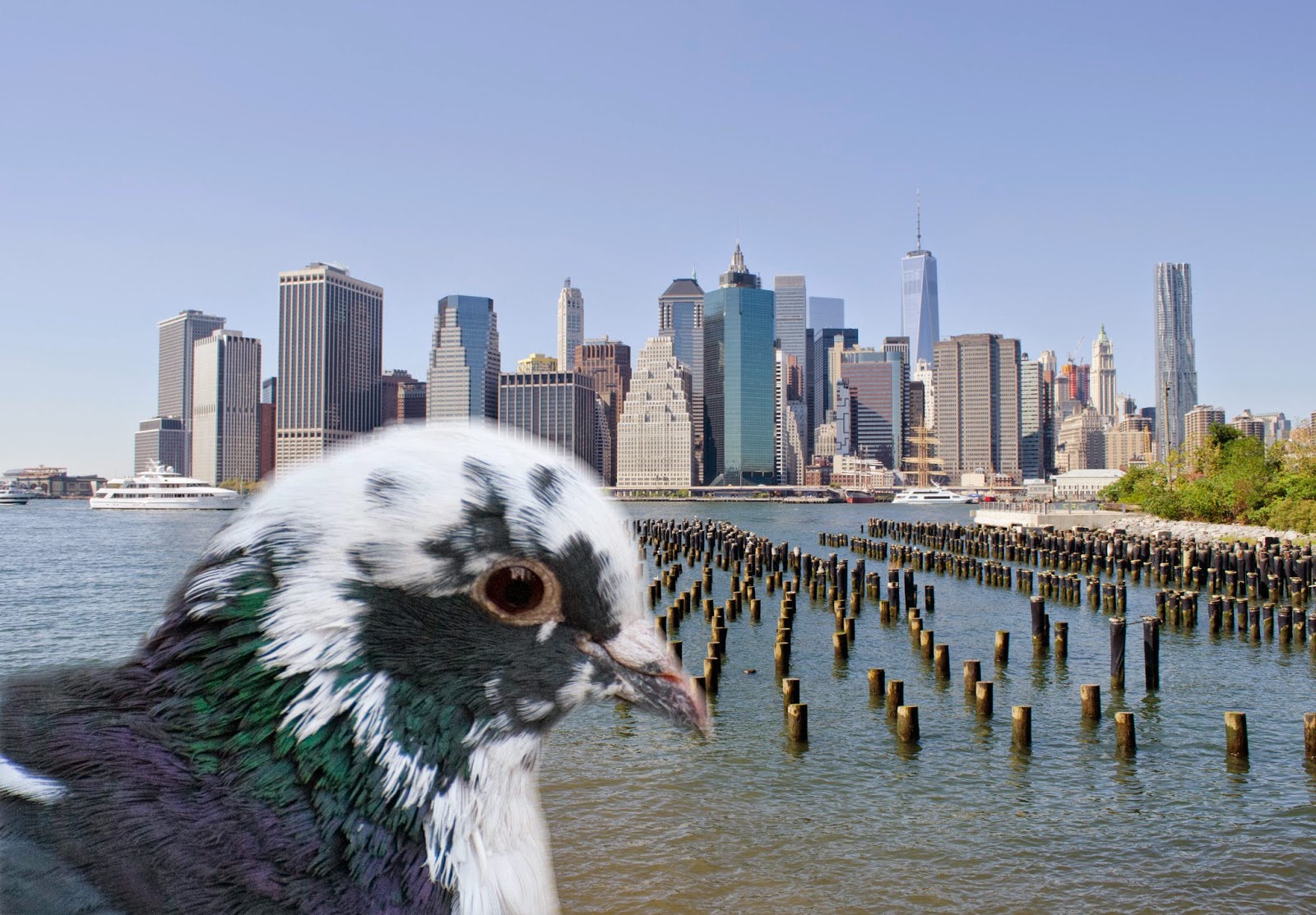
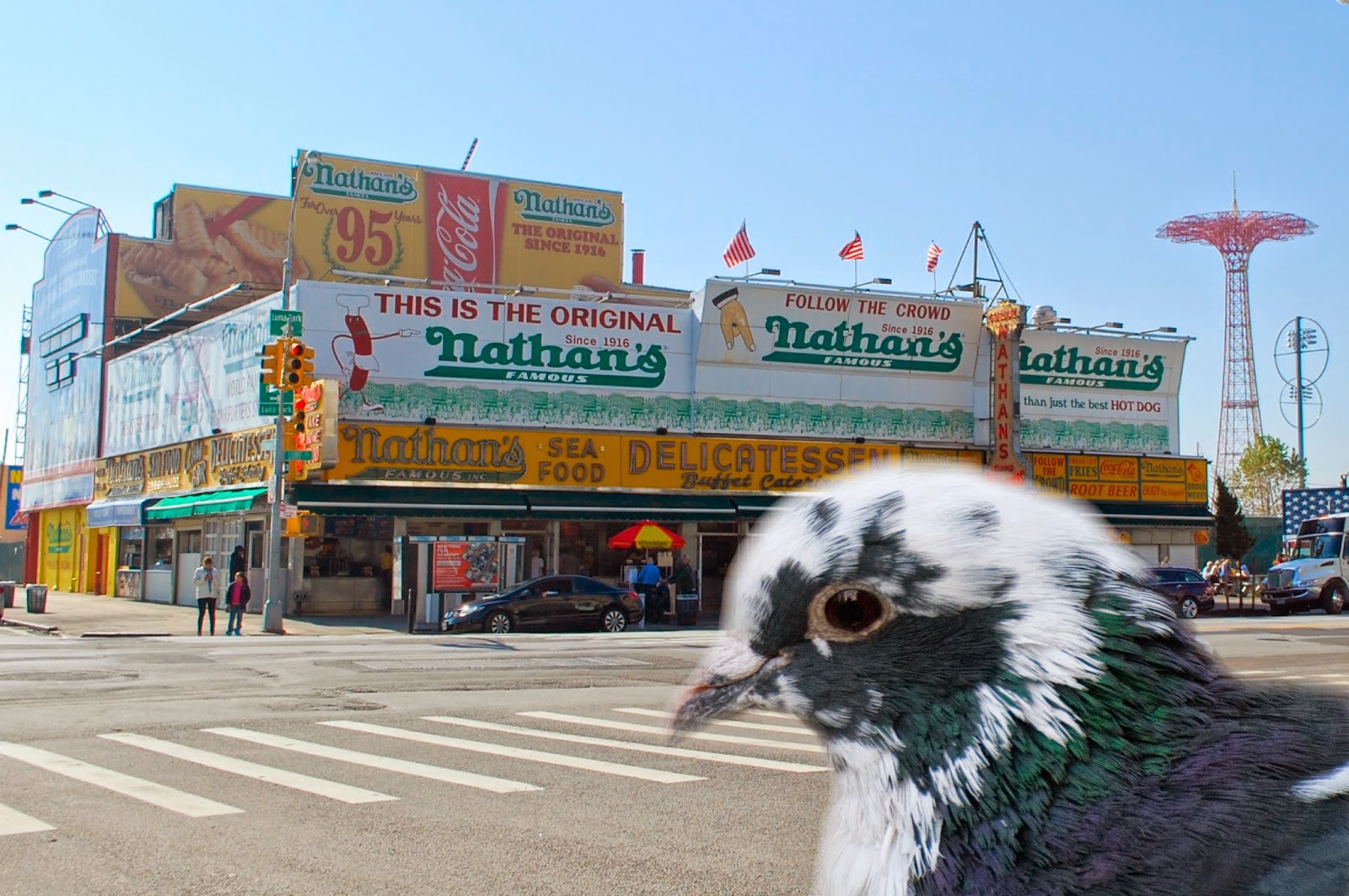
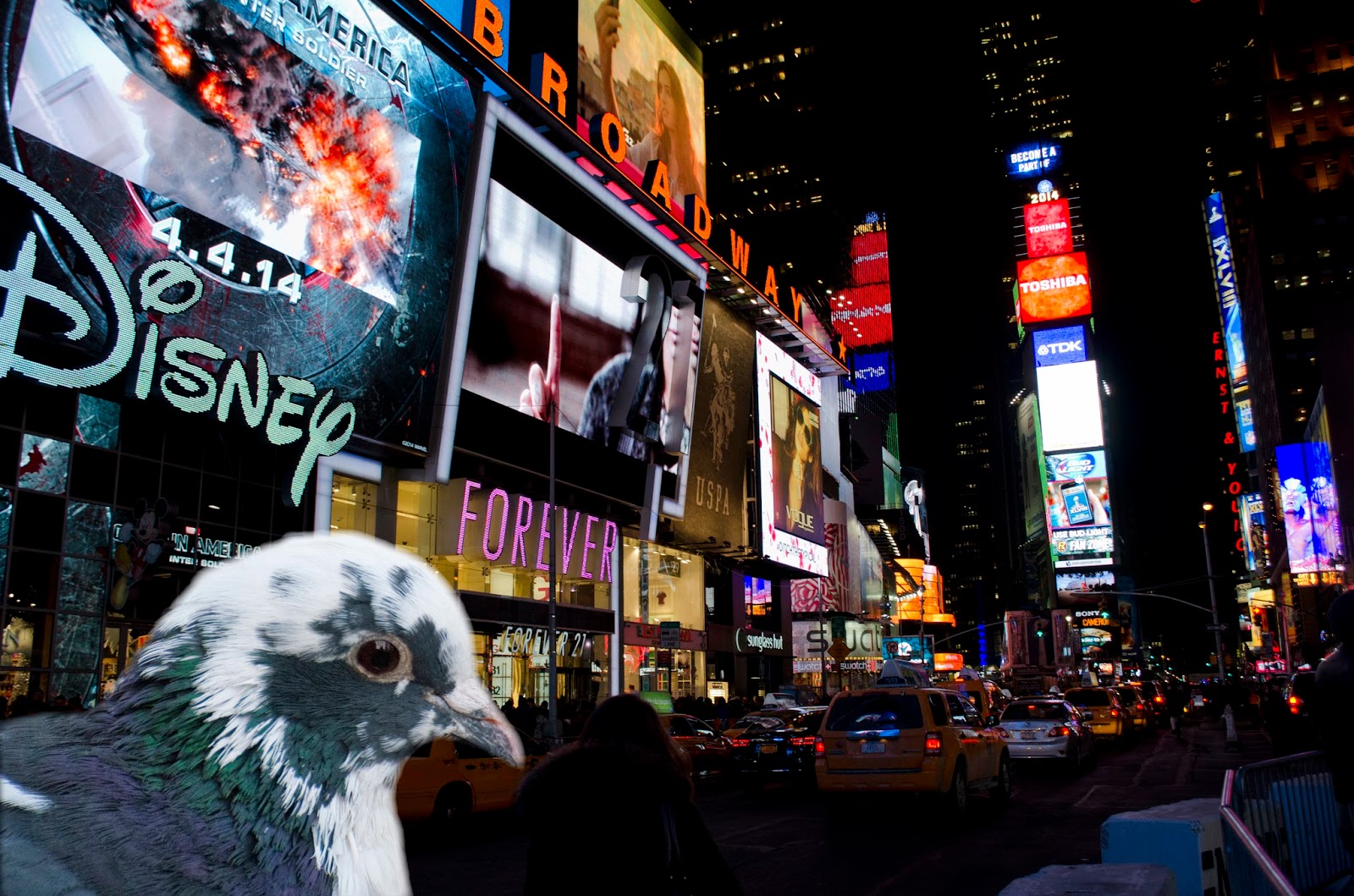
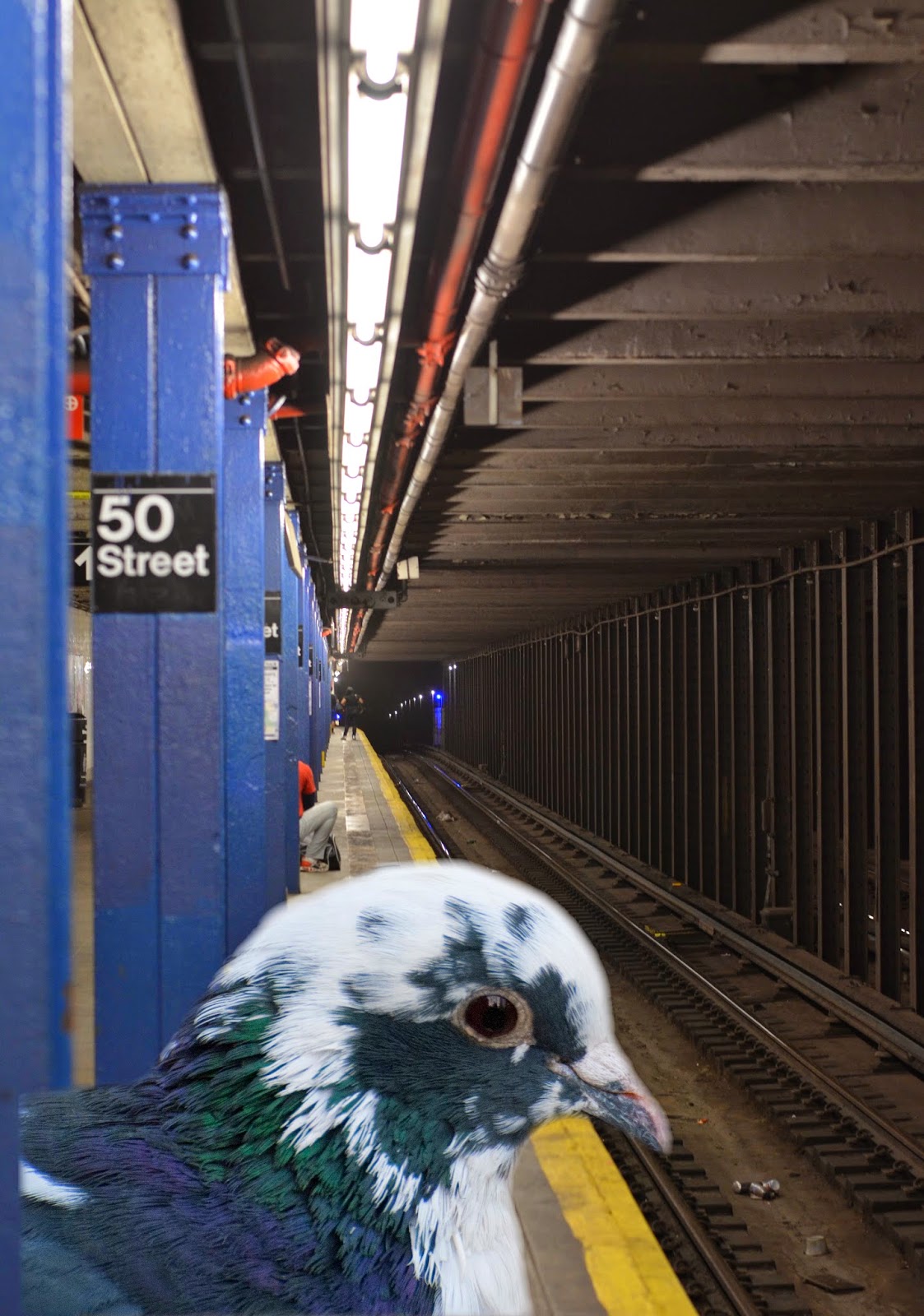
Isolated Pigeon takes New York


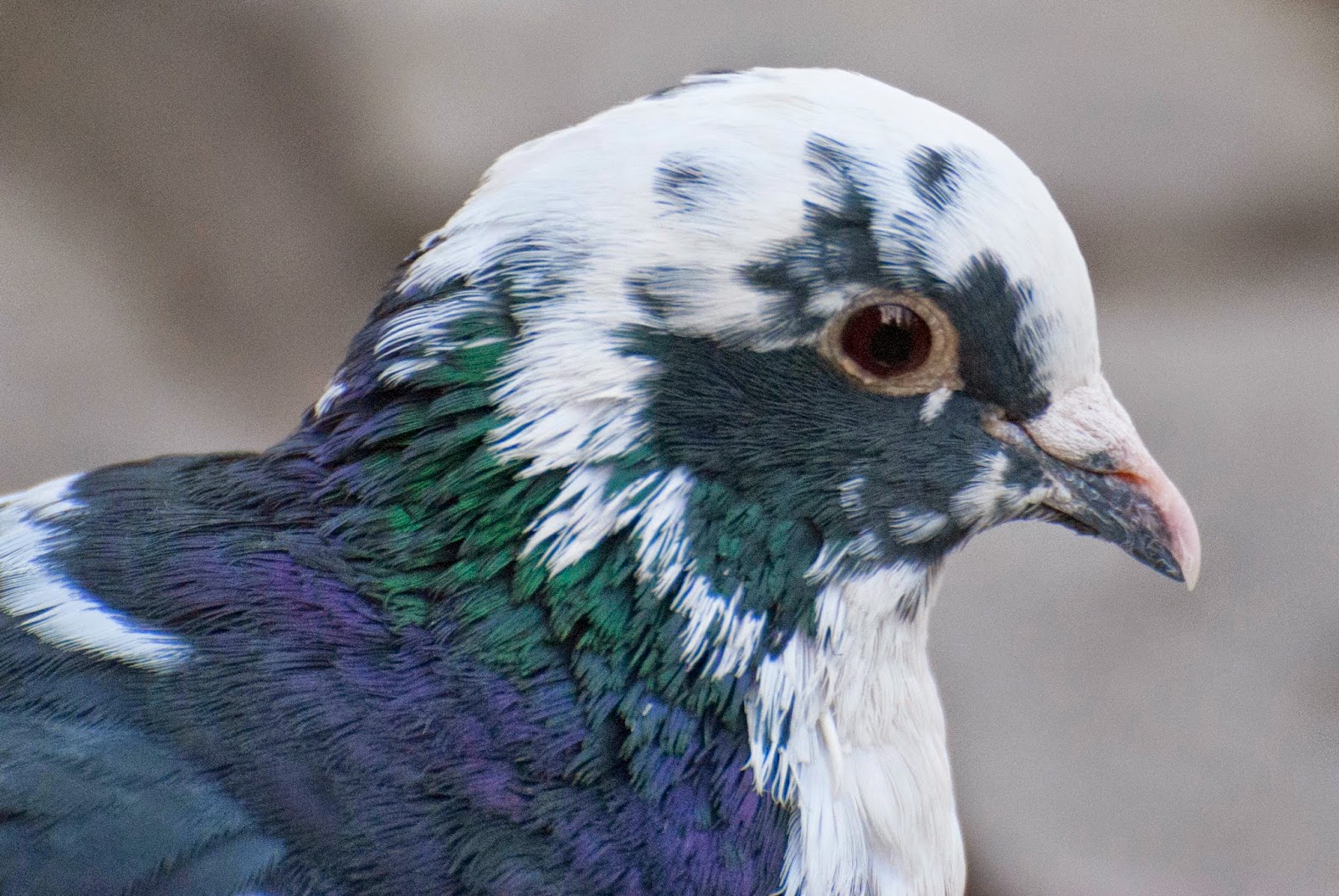
This week's story is less about urban wildlife than it is about my new Wacom graphics pad, although it does include a pigeon. I already knew how to isolate parts of photos using Adobe Illustrator, but a graphics pad makes it much easier. So I wasted an hour isolating a pigeon and dropping him into photos around New York. There is a brief description of the method at the end. It's a useful technique to make nice graphics for presentations. I am starting with this photograph of a pied pigeon. Click to enlarge. 
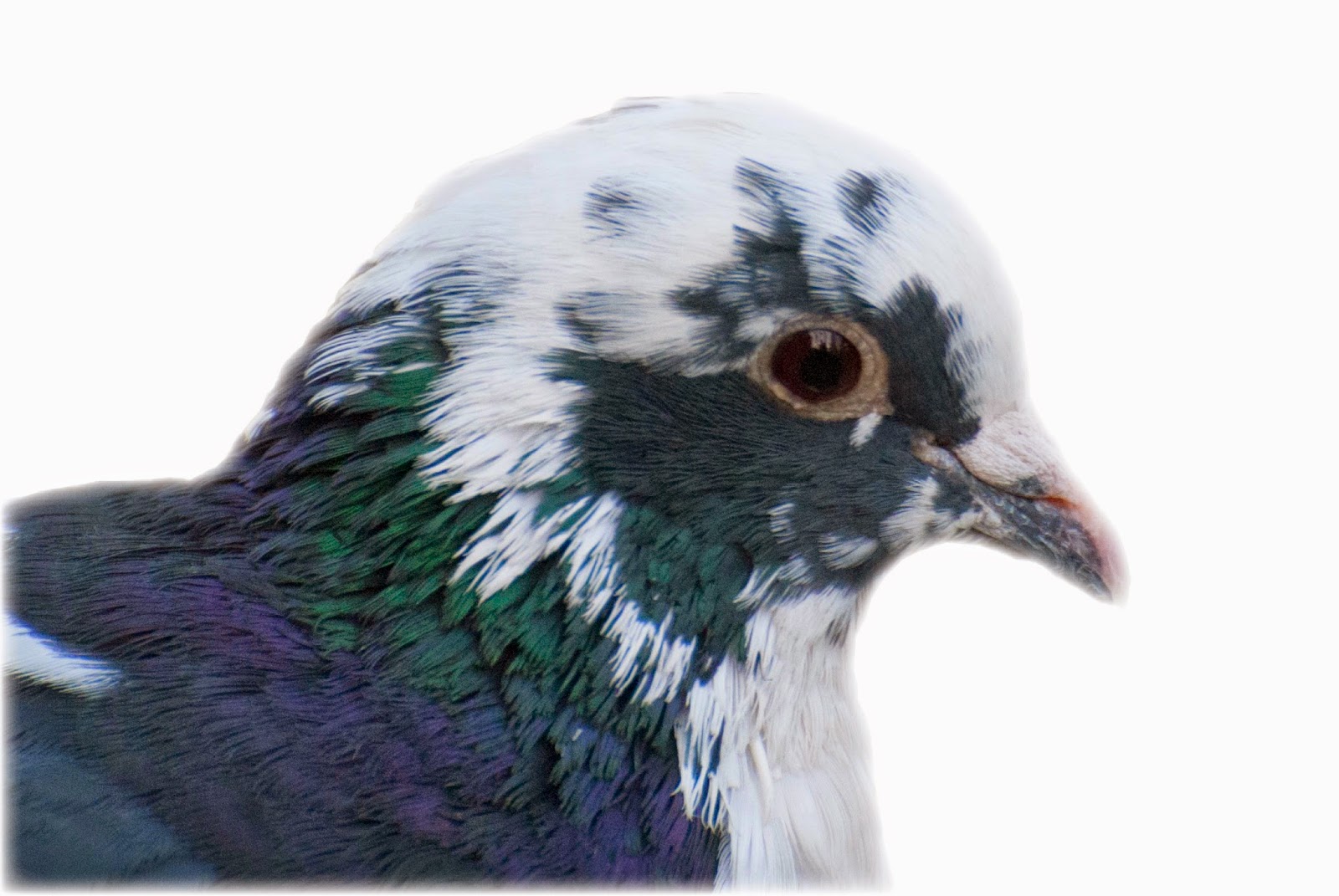
The pigeon has been extracted from the background. 

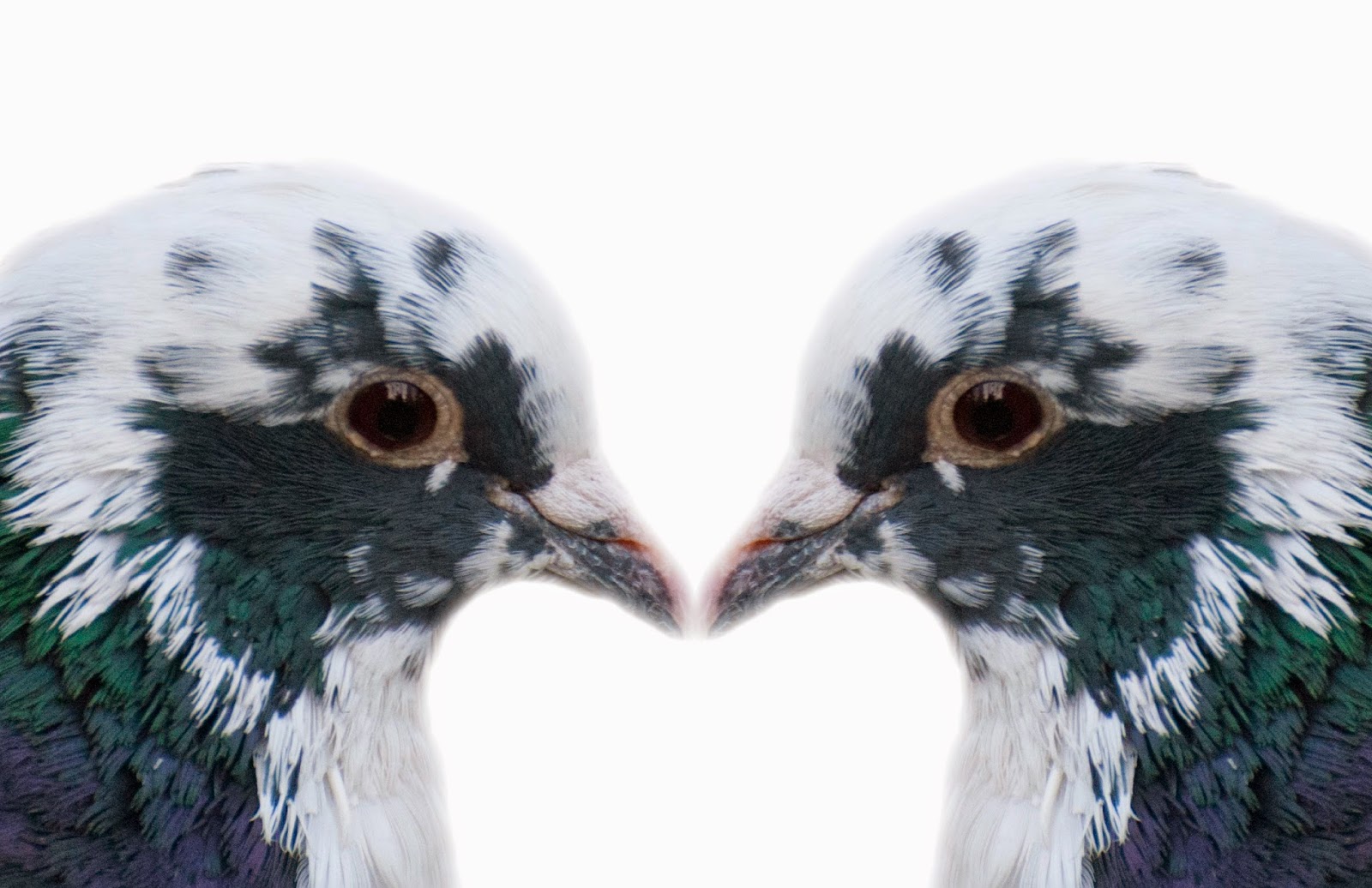
Once isolated, it is easy to duplicate and reflect the image. 

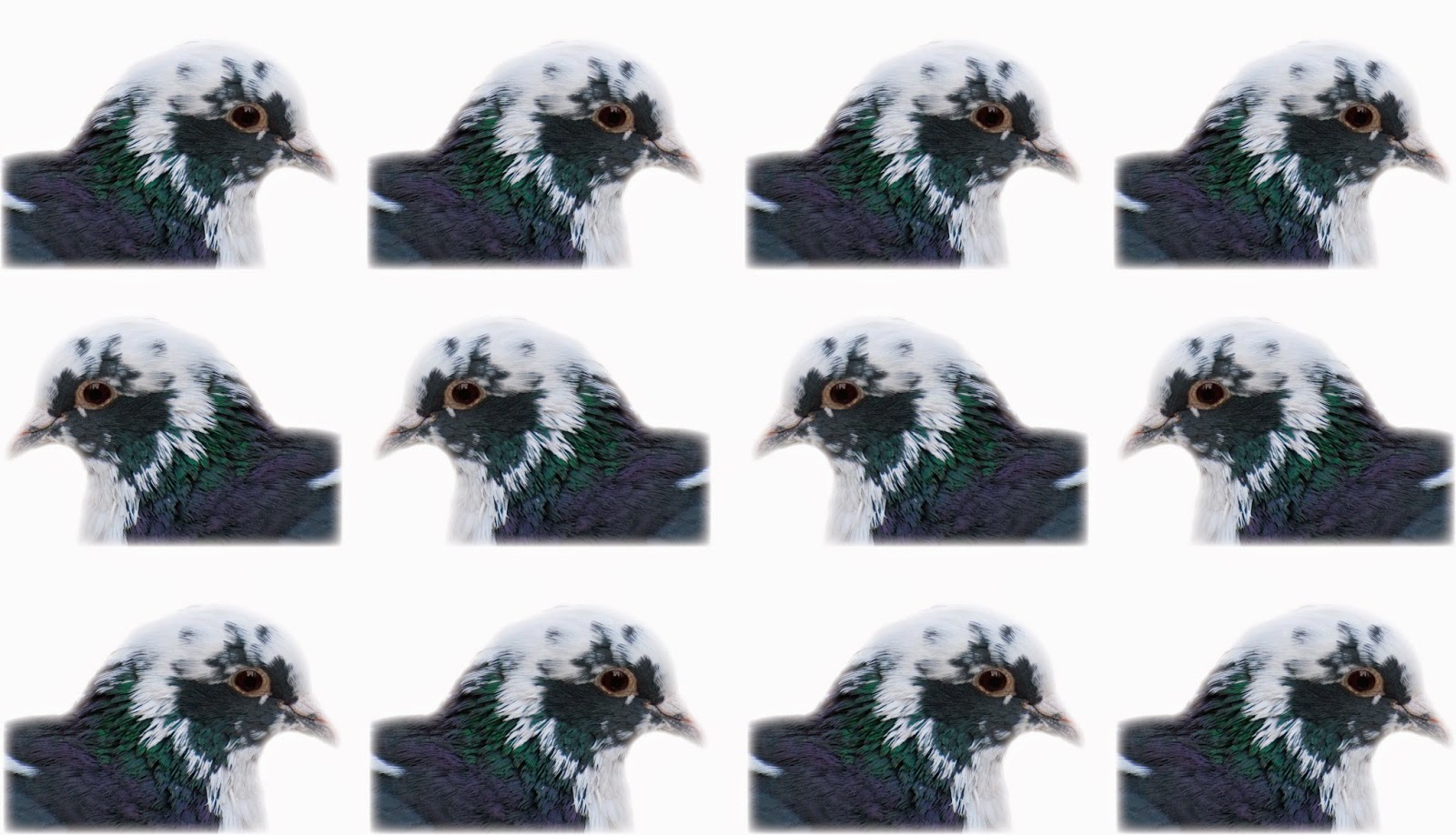
Or to duplicate and reflect lots of them. 
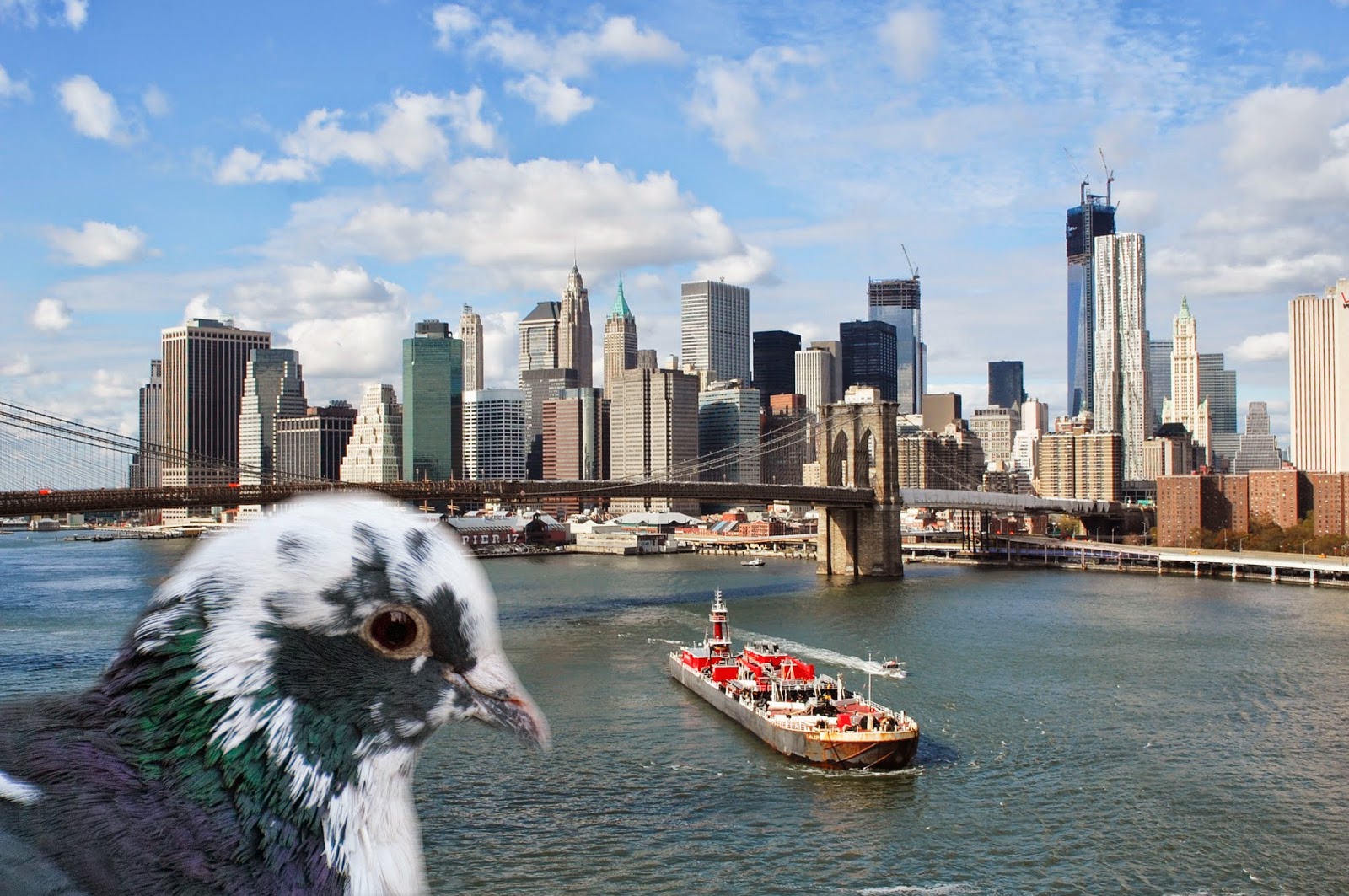
Or to drop him into the action at the Brooklyn Bridge. 
Or on the shore of the East River. 
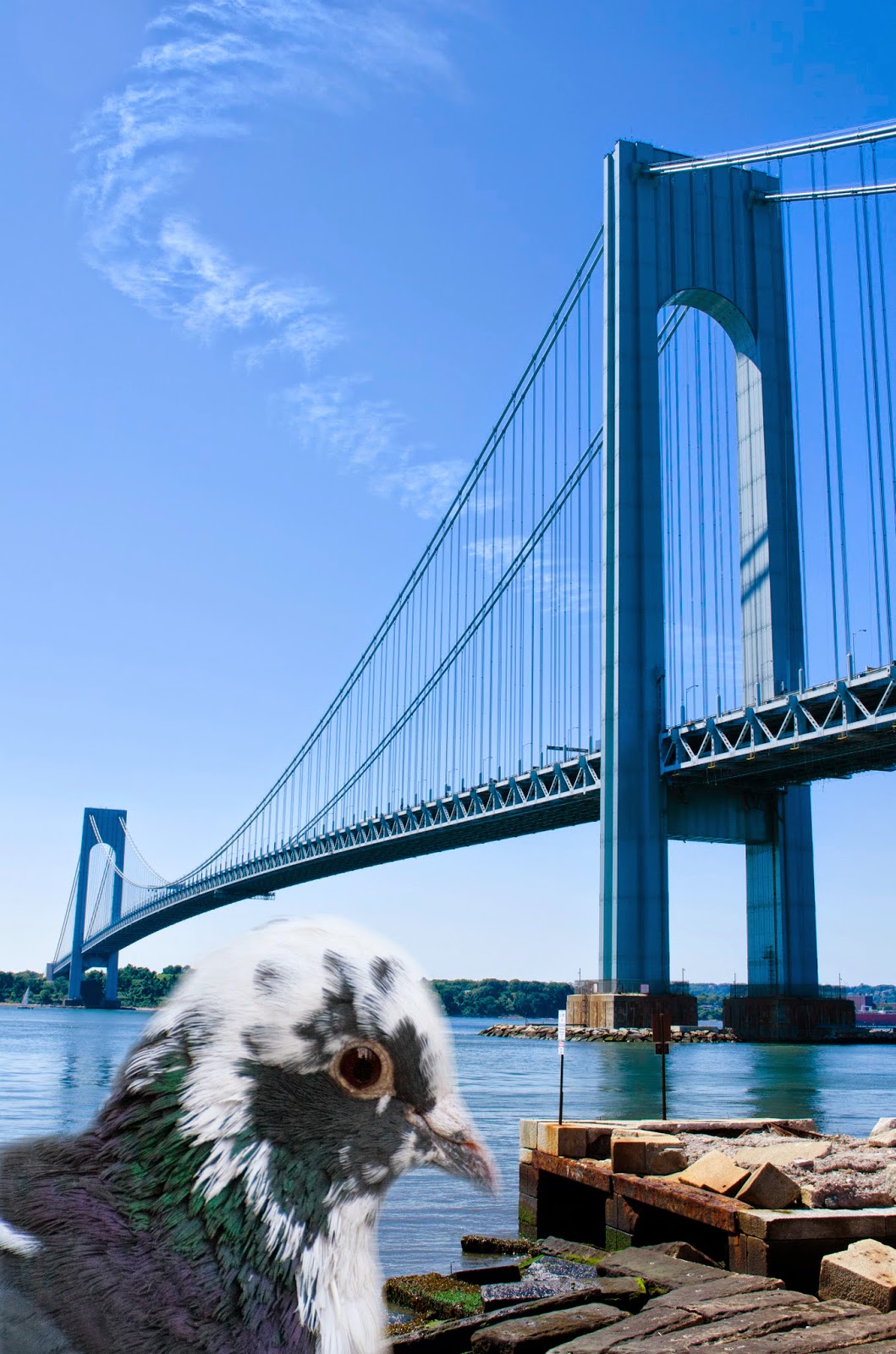
Or Coney Island. 
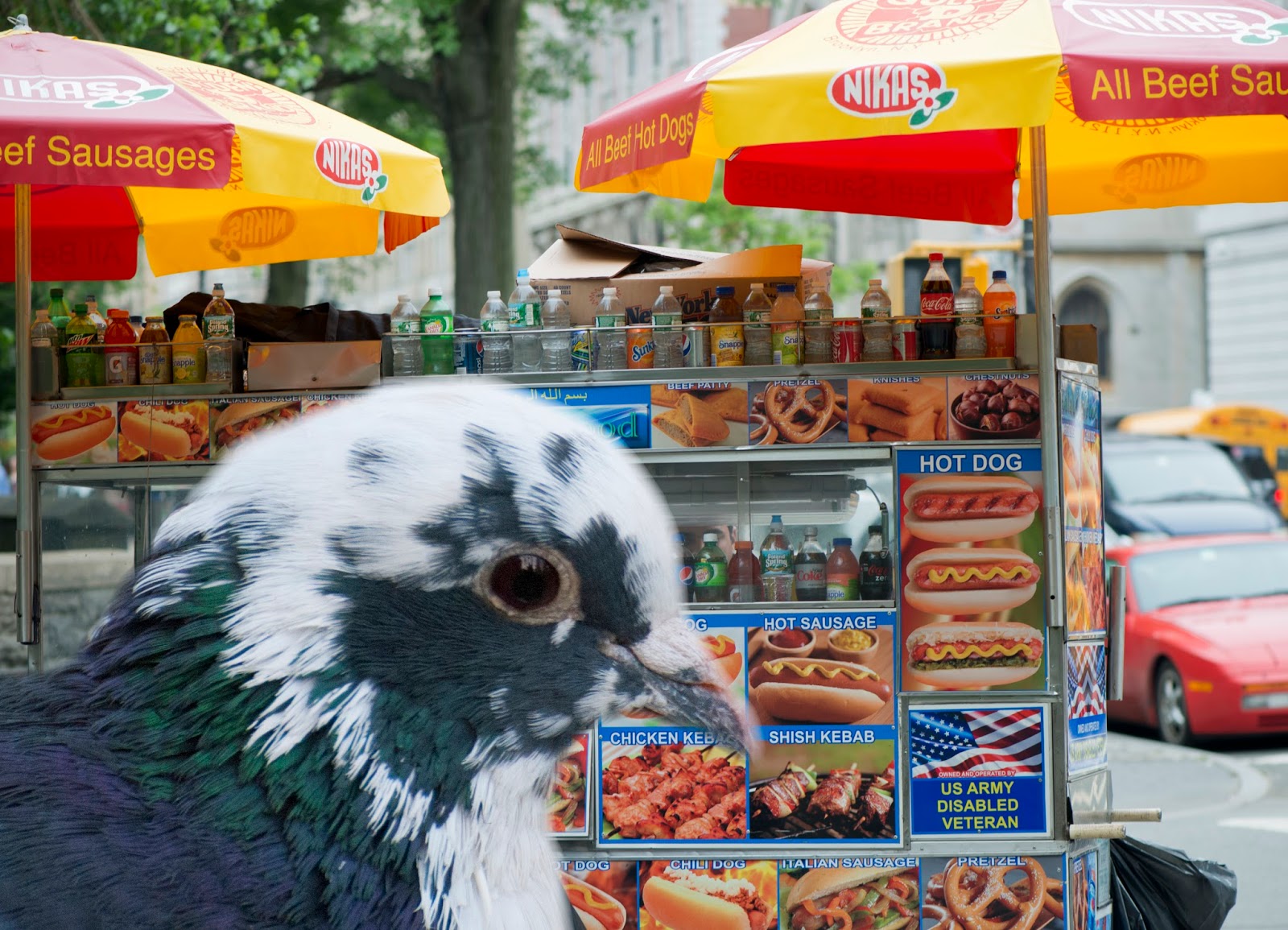
Or Times Square. 
Or taking in the view from the Manhattan Bridge. 
Picking up a snack. 
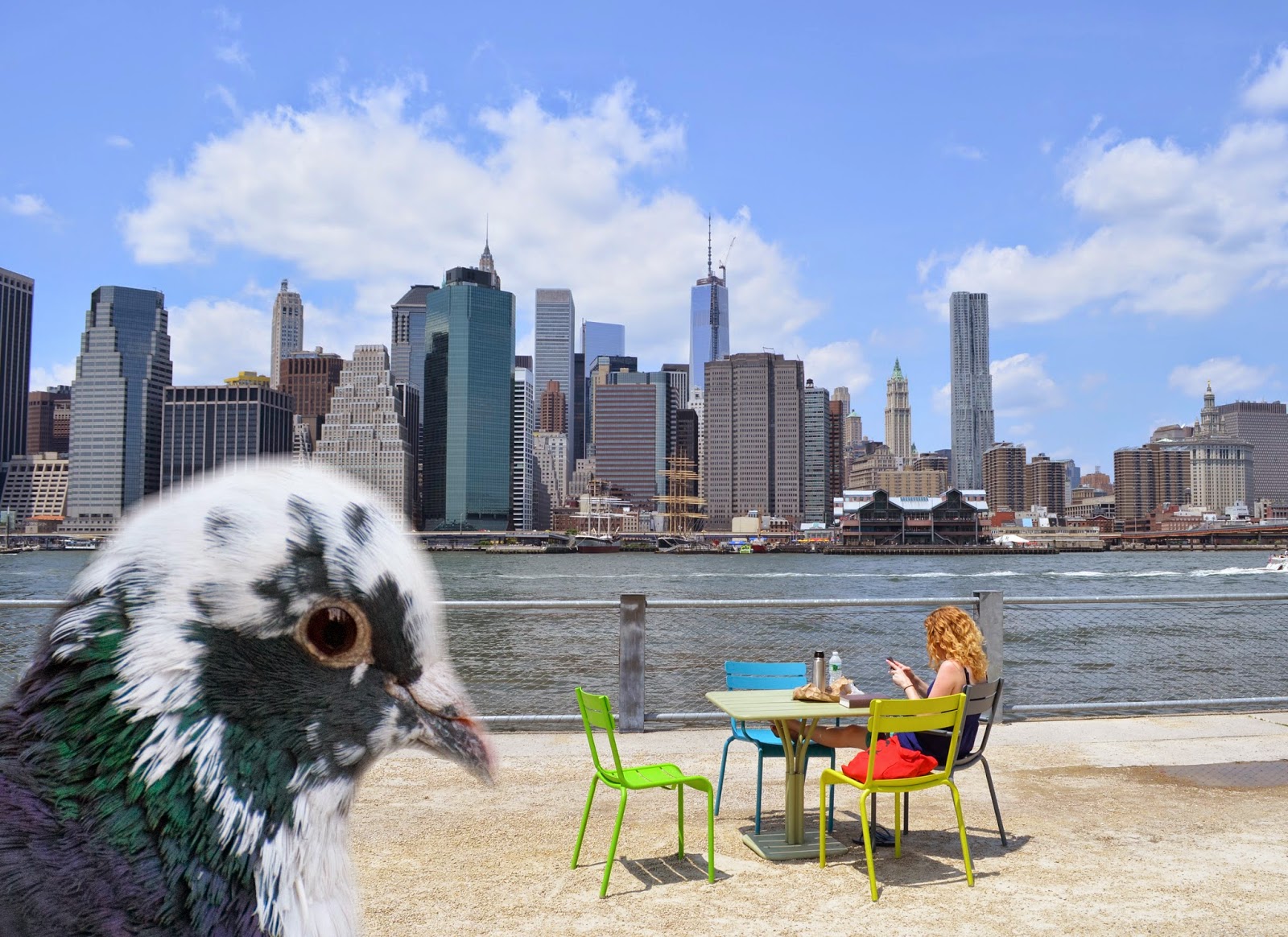
Hanging out at Brooklyn Bridge Park. 
Stayin' alive.  


You get the idea. Here's how to do it on a Mac. Open the photo that contains something you would like to isolate, like a pigeon, in Adobe Photoshop. (I have version CS5.1.) Use the pen tool to outline the thing you want to isolate. (This is MUCH easier if you have a graphics pad plugged into the computer because you can outline with an actual pen in your hand instead of a mouse.) The outline will be a series of dots connected with lines. Use more dots where the shape of the edge is more complex. Work your way all around the edge and join the last dot to the first. Then open the "Paths" window in Photoshop and choose "load path as a selection." From the "Layer" menu, select 'New" and then "layer via cut." Look at the layers panel and you will see two layers -- your newly cut out image and the background it came from. Discard the background by dragging it to the layers panel trash can. What's left is the isolated image. Save. Then open it in Adobe Illustrator (I have CS5.1) and select "feather" from the "Stylize" menu to soften the edges of the cutout. After that, do whatever looks good -- change the size and orientation or paste it into other photos. When you have finished a creation, use the art board tool to crop as desired. I usually save as an .ai file, then open with Preview, export, and save as a .jpg. 

Waiting for the C train. 

Sunday, January 4, 2015

Quiet Mockingbirds

I have seen where the she-bird, the mocking-bird, sat on her nest 
in the briers, hatching her brood. 
I have seen the he-bird also; 
I have paused to hear him, near at hand, inflating his throat,
and joyfully singing. 

Walt Whitman, Starting from Paumanok, Leaves of Grass

When I picture a mockingbird, it often looks like the one above -- sitting on a conspicuous perch with beak open and singing loudly. But mockingbirds don't sing in winter. I have written about winter mockingbirds before -- click here for an earlier blog -- but every year I notice their seasonal personality change. For the last few weeks, as the weather has become grey and cold, a mockingbird has been coming to my porch in the mornings looking for raisins.

Except for its flashy white wing patches, you might think it was an entirely different bird than its summer self. It is quiet! The famous singer has not a word to say. It is enough to give the widely held impression that mockingbirds fly south for winter. Some mockingbirds from colder places further north might move to warmer locations for winter, but in Brooklyn they stay put -- and rest their voices. 

This young Brooklyn mockingbird, born nearby in the summer of 2012, is hopefully among this year's winter visitors. 
Mmm... serviceberry! Click to enlarge.